Living in the United States
When Is Father’s Day in the United States and Latin America?
We’ll show you when Father’s Day is celebrated in the United States and Latin America, how this tradition began, and ideas to celebrate Dad.
8 min read


One of the greatest challenges faced by the immigrant community living in the United States is dealing with the nostalgia of being far from their home country and loved ones.
A father is one of the most important family members, as he ensures that nothing is missing at home—from daily meals to the unconditional love that lasts a lifetime. That’s why, despite the distance, celebrating Father’s Day is especially meaningful.
Since the date of this celebration varies between the U.S. and Latin America, we’ll explain when Father’s Day is celebrated in both regions, how it’s observed, and how to stay connected with those you love most.
The Meaning of Father’s Day for the Immigrant Community
The origin of Father’s Day dates back to the early 20th century, when Sonora Smart Dodd proposed honoring fathers in tribute to her widowed father who raised six children on his own. Since then, the United States has observed the third Sunday in June as the official date to celebrate fathers.
Gradually, the celebration spread within and beyond the country, reaching much of Latin America, where—alongside Mother’s Day—it’s a special occasion to strengthen family unity.
For the immigrant community, this day has become more emotional than usual. On one hand, there are many fathers in the U.S. who arrived seeking a better future for loved ones back home. On the other hand, there are children celebrating their fathers from afar, offering love and support across borders.
Some of the ways fathers and children stay in touch include sending remittances to their home country, exchanging messages, and making video calls to stay connected.
When Is Father’s Day Celebrated in the United States?
In the United States, Father’s Day is celebrated on the third Sunday of June—a day that has become a symbol of recognition for the dedication of fathers who provide for their families and offer unconditional love.
Do you know how the first Father’s Day began? The celebration was promoted by Sonora Smart Dodd, inspired by her father, a Civil War veteran who raised six children alone. The idea was well received and gradually became popular nationwide until President Richard Nixon made it an official holiday in 1972.
We explain what CashApp is and all its benefits.
Typical Father’s Day Traditions in the U.S.
For the immigrant community in the U.S., this day is an opportunity to thank fathers for their hard work and sacrifice over the years to support their families.
Some common ways this special day is celebrated include:
Family Gatherings
Families in the U.S. often spend the day together eating and drinking at home, listening to music, dancing, and sharing funny stories about their fathers.
Activities
Another option is to enjoy outdoor family activities such as organizing or attending a soccer game, having a picnic, or watching a movie together.
International Calls
One way to bring families together across borders is through international calls or video chats. Fortunately, there are now more ways than ever to bridge the distance through technology.
Father’s Day Dates in Latin America
In most of Latin America, the date of Father’s Day doesn’t vary much.
Countries That Celebrate on the Same Day as the U.S.
Country
Cultural Differences
Mexico
Celebrated with traditional meals, school festivals, and greeting cards.
Colombia
Families host lunches accompanied by live music.
Peru
A day to honor the hard work of fathers.
Chile
Not an official holiday, but still celebrated with family meals.
Argentina
Originally celebrated on August 24, a date still observed in some provinces.
How to Celebrate Father’s Day from the United States
Distance is no reason to skip celebrating such an important occasion. Here are a few ways to show your dad you’re thinking of him even if you live in another country.
Send a Small Gift or a Symbolic Remittance.
More than a material item or money, sending a gift or remittance to your father is a way to show that he remains an important part of your life.
Make Family Video Calls or Virtual Gatherings.
This is the easiest way to stay in touch, not only on Father’s Day but also throughout the year. You can organize a group video call and invite family members to celebrate together.
Share Photos or Memories.
Photos are the best way to preserve special moments with loved ones. You can create a collage of meaningful pictures and share it with a heartfelt message.
Cook a Traditional Dish from Home.
Traditional food is one of the best ways to connect with your roots. Even if you’re far from your father, you can honor him by cooking his favorite dishes and remembering his presence.
With Común, Staying Close to Your Family Is Easier
In this article, we showed you when Father’s Day takes place in the U.S. and several Latin American countries, and offered ideas to celebrate from afar.
Your father is one of your strongest pillars of support. Likewise, Común is here to back you with the financial security you need.
Sending money to your father and other loved ones is something you should entrust only to a platform that understands the needs of immigrants in the United States.
Discover Común, the digital platform that allows you to send money from the U.S. to Latin America easily and with clear, fair fees. Best of all, you can open an account with a qualifying official ID from your home country.
At Común, we understand that love for your father transcends physical distance. With our financial tools, you can continue supporting your family with confidence—wherever you are.
Frequently Asked Questions (FAQ)
If you still have questions, take a look at the section below.
What Is Celebrated on June 17 in Mexico?
This is not an official holiday in Mexico, although it’s sometimes confused with Father’s Day celebrations in countries such as Guatemala or El Salvador.
When Is Father’s Day in Mexico in 2025?
This year, Father’s Day took place on Sunday, June 15.
How Can You Keep the Father’s Day Tradition Alive from Another Country?
You can choose to make video calls, send remittances or gifts, and express to your father how important he is in your life.
Conclusion
Starting a business as an immigrant is entirely possible with the right steps. By choosing the right business structure, obtaining the necessary tax IDs, and registering properly, you’ll build a strong foundation for success.
Need an easy way to manage your business finances?
Común offers banking solutions designed for Latino entrepreneurs. Open your account today!
Olivia Rhye
Community Partner

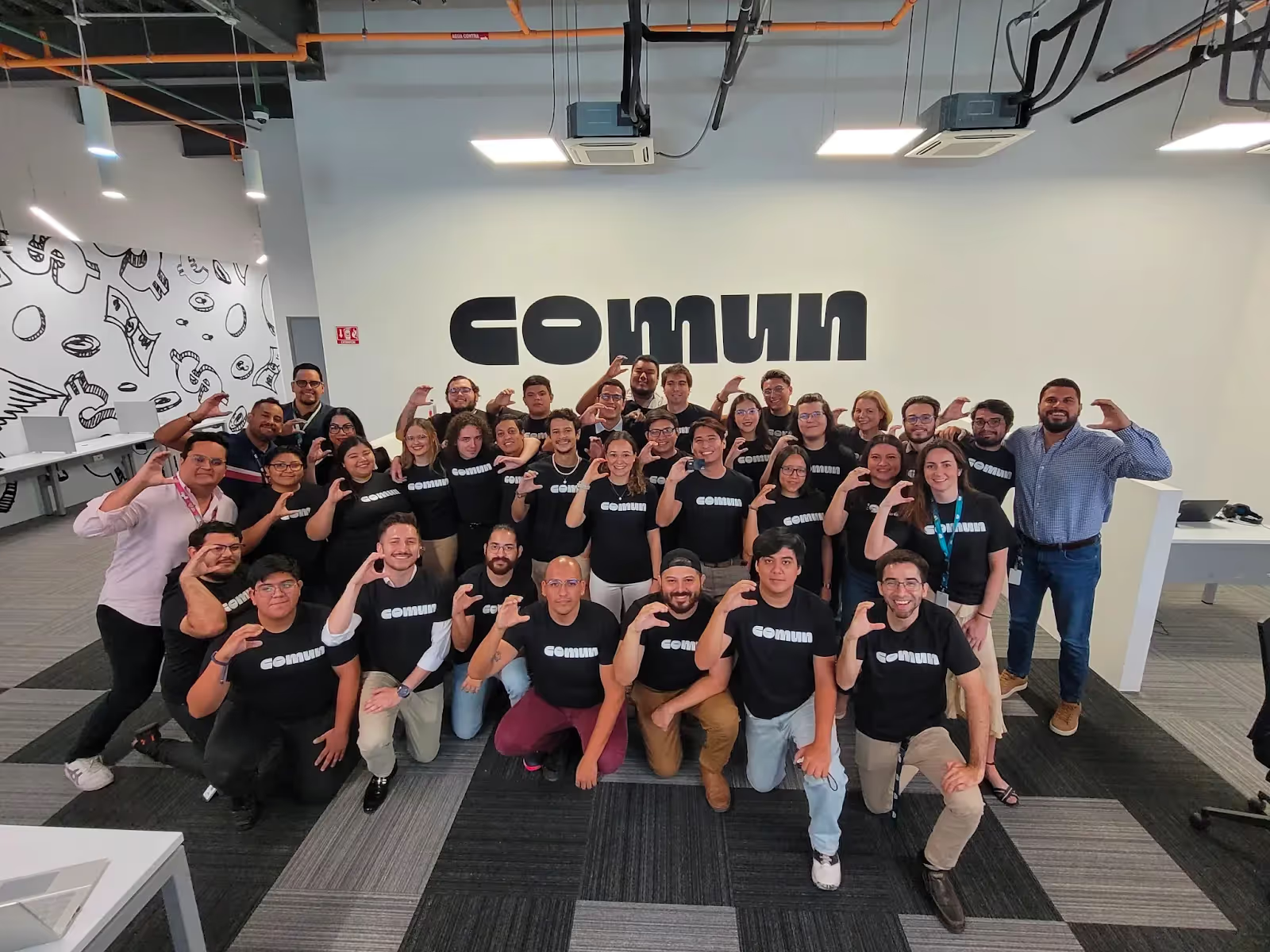
Comun aprovecha el poder de la Comunidad para redefinir la banca de relación digital para los inmigrantes en los EE. UU.
8 min de lectura
Comun no tiene sucursales, pero cuenta con un equipo que apoya a sus clientes las 24 horas del día, los 7 días de la semana, sin salir de sus hogares, en tres idiomas diferentes.
Construir mejor futuro para los inmigrantes en los EE. UU. es un principio fundamental de la misión de Comun. Opciones bancarias accesibles y fáciles de entender son una parte clave del viaje del inmigrante. Sin embargo, las opciones son escasas.
Las opciones complejas, engorrosas y costosas son la norma. Actividades que pueden parecer triviales e intuitivas para los nacidos en los EE. UU. son abrumadoras y confusas para un inmigrante recién llegado. Todo, desde configurar un depósito directo con un empleador hasta enviar dinero a casa, realizar pagos de bienes y servicios o comprender cómo construir un puntaje crediticio, parece demasiado complejo para cualquiera que nunca haya tenido que hacer esto en los EE. UU., y mucho menos en absoluto.
Las tarifas ocultas y las comisiones costosas añaden un nivel de estrés al comenzar una vida financiera en los EE. UU. Entre los saldos mínimos de cuenta, las tarifas mensuales, los cargos por sobregiro, las grandes tarifas de depósito de cheques, las comisiones extorsivas de transferencias internacionales y todo lo demás, mantener y usar una cuenta bancaria en los EE. UU. puede ser costoso. Para los trabajadores manuales, esto puede representar un porcentaje importante de su salario.
Las ubicaciones físicas de los bancos tradicionales también pueden ser escasas en algunas áreas. Dado que abrir una cuenta bancaria o depositar un cheque o efectivo en la cuenta debe hacerse en la sucursal, esto es una carga significativa para alguien que vive en una zona remota. Muchos inmigrantes, a veces trabajando en granjas o fábricas remotas, viven en áreas a kilómetros de distancia de la sucursal bancaria más cercana. Los costos de transporte a esas sucursales se suman a las tarifas ya altas de usar y mantener una cuenta.
Incluso si los servicios bancarios proporcionados fueran más intuitivos, digitales y a un costo menor, queda otra barrera importante. Obtener la documentación necesaria para abrir una cuenta bancaria también puede dificultar el acceso a servicios financieros justos y simples. Los inmigrantes lo suficientemente afortunados como para tener autorización de trabajo aún necesitan reunir documentación importante que no siempre está disponible para ellos. Para aquellos que han llegado a los EE. UU. buscando asilo o mejores oportunidades de trabajo siguiendo un camino más no convencional, los documentos requeridos para abrir una cuenta a menudo son prohibitivos.
Construir una plataforma bancaria 100% digital para resolver los problemas mencionados es parte de lo que Comun busca lograr porque creemos en ayudar a desbloquear la movilidad social. Pero una plataforma digital, de bajo costo e intuitiva no es suficiente. Para navegar este proceso, los inmigrantes necesitan ayuda, y la ayuda se encuentra mejor en una Comunidad que los entiende cuando más lo necesitan.
Es por eso que no solo nuestros clientes son parte de nuestra Comunidad, sino también las personas que los ayudan las 24 horas del día, los 7 días de la semana a través de nuestra aplicación, redes sociales, WhatsApp o por teléfono. Más allá de resolver un problema inmediato, el apoyo brindado va más allá. Enseña y educa, empatiza y se esfuerza por fomentar un sentido de Comunidad de personas que los entienden, en términos que comprenden y en el idioma que hablan. Este es el núcleo de la verdadera banca comunitaria digital. Nuestro equipo les ayuda a configurar su depósito directo, conectarse a Zelle, obtener reembolsos por cargos con los que no están de acuerdo y todo lo demás.
En Comun, el primer paso en este viaje ha comenzado. Nuestro equipo en Mérida, México, es parte de nuestra Comunidad y a la que buscamos servir. Son una extensión de nuestra misión y de nuestra plataforma digital, y un ingrediente necesario para desbloquear la movilidad social para millones de inmigrantes en los EE. UU.

Instant payments
Which Banks in Mexico Support Zelle? A Complete Guide to Sending and Receiving Money from the U.S.
8 min de lectura
In today’s digital era, having access to technology that enables fast and secure money transfers is essential.
Zelle is a service that allows easy transactions, as it is integrated into the digital banking platforms of U.S. banks.
Without a doubt, Zelle is one of the most popular digital payment services in the United States. According to recent data, in 2024 the company processed more than $1 trillion across over 3.6 billion transactions.
Additionally, 151 million user and small business accounts are registered with Zelle, representing a growth of 16 million compared to 2023.
If you need to send or receive money, this could be an excellent option, since all you need is a mobile phone number or email address.
It is also integrated with major U.S. banks, such as Bank of America and Wells Fargo.
It is essential to know the list of banks that offer Zelle in the United States to ensure that you will be able to use the service through your bank—especially as new conditions came into effect in April 2025.
For this reason, we will explain in detail what Zelle is in the U.S., the main banks that support the service, and how it works.
What Is Zelle?
According to Denise Leonhard, CEO of Zelle, this company is not just a popular way to send money; it is a vital tool transforming the way money moves in the United States.
Zelle is a network developed by Early Warning Services, LLC, which allows digital payments and bank transfers between users of the same or different banks, mainly within the U.S.
It is directly integrated into banking apps, making it easier to manage transactions within the same mobile banking experience.
What Are the Benefits of Zelle?
Zelle offers multiple benefits for its users, such as:
Speed
Transfers are completed in minutes
Cost
Transfer service is free at most financial institutions
Ease of Use
No external app is required, as Zelle is integrated into bank apps
Accessibility
You only need the recipient’s email or phone number to send money
Coverage
Available through a large number of U.S. banks and credit unions
Direct Payments
Uses funds directly from your bank account; no need to top up a digital wallet
This service is an excellent option if you are looking to make fast, secure, and free transfers within the U.S., although it does not support international money transfers.
Major U.S. Banks That Work With Zelle
Zelle’s presence in daily financial operations has grown significantly. According to recent data, Zelle is integrated with more than 2,200 U.S. banks, 95% of which are community banks and credit unions.
Below is a list of major financial institutions using Zelle in 2025 and their transfer limit if applicable. Please refer to each financial institutions for the most up-to-date information
| Name | Transfer limit |
|---|---|
| TRADITIONAL FINANCIAL INSTITUTIONS | |
| Bank of America | 3,500 USD per day |
| Chase | Dynamic limit set by the institution. Ranges from 500 to 10,000 USD per day |
| Citi Bank | 2,500 USD for accounts registered more than 30 days ago |
| TD Bank | 1,000 USD for instant transfers and 2,500 USD for scheduled transfers (up to 3 business days) |
| USA Federal Savings Bank | 1,000 USD per day |
| Wells Fargo | 3,500 USD per day |
| DIGITAL BANKS | |
| Ally Bank | 600 USD per day |
| Discover Bank | 500 USD per transaction, 1,000 USD per day |
| Quantic Bank | 2,000 USD per day |
| SoFi | 1,000 USD per day |
| Truist Bank | No specified limit |
| USA Federal Savings Bank | No specified limit |
| CREDIT UNIONS | |
| BECU (Boeing Employees CU) | 1,500 USD per day for instant transfers. 3,000 USD per day for standard transfers |
| Bethpage Federal CU | No specified limit |
| Delta Community CU | No specified limit |
| First Tech Federal CU | No specified limit |
| Navy Federal | No specified limit |
To use Zelle through these financial institutions, there is no need to download a third-party app, as all have direct integration. Additionally, transfers are free of charge.
How to Receive Money Through Zelle
To receive money using Zelle, follow these steps:
- Make sure your bank offers Zelle integration
- Visit your bank’s website and register for Zelle
- Provide your mobile number and email address—others can use these to send you money
- Receive money directly in your bank account within minutes
- You can also send money to users registered with Zelle.
Note: To send and receive money through Zelle, both parties must have accounts at banks that support the service.
How to Check if Your Bank Offers Zelle
If you want to use Zelle and are unsure whether your bank supports it, visit Zelle’s official website and enter your bank’s name in the search bar. If it appears, you can use Zelle via your mobile banking app.
7 Reasons Banks Partner with Zelle
Integration with Zelle offers banks several advantages:
1. Increased Competitiveness
Zelle provides an edge over services like Venmo and PayPal, and encourages mobile banking app usage.
2. Improved Customer Experience
Zelle simplifies person-to-person transfers and consolidates transaction history in one place.
3. Cost Reduction
P2P transfers are more cost-effective than traditional payment methods like checks.
4. User Retention
Encourages more frequent use of the banking app and reduces customer churn.
5. Security
Backed by official U.S. financial institutions, Zelle adheres to strict banking and regulatory standards.
6. Speed
Zelle enables quick transfers, even between different banks.
7. Established System
With over 2,200 integrated banks, Zelle is a leading digital payments system, prompting other banks to join.
Changes to the Zelle App
Zelle recently announced changes effective April 1. As of that date, users can no longer send or receive money through the standalone Zelle app.
How to Continue Using the Service?
Users of the standalone app must now re-register through their bank’s online platform, provided the bank is integrated with Zelle.
If you do not have a bank account linked to Zelle, you will no longer be able to use the service. It is essential to review Zelle’s FAQ section for the latest updates and list of participating banks.
Important Security Tip:
Always verify the recipient’s information, as Zelle does not offer fraud or error protection. Once money is sent, the transaction cannot be canceled.
Does Your Bank Not Offer Zelle? Use Comun to Easily Transfer Money in the U.S.
If your account is not with a Zelle-integrated bank, or if you used the standalone Zelle mobile app and don’t have a bank account, there is a solution designed for you that simplifies transfers and financial inclusion in the U.S.
Comun offers an easy, accessible, and affordable alternative for making transfers and payments.
It is a platform that promotes financial inclusion for individuals facing barriers with traditional
U.S. banks, offering a user-friendly, Spanish-language service. Some key benefits of Comun include:
- Apply using your official ID from your country
- Access a mobile app
- Receive a debit card for purchases
- Make low-cost transfers within and outside the U.S.
- Send money to friends and family to LATAM starting at $2.99 transfer fee
Open your Comun account and start your financial life without complications.
Financial Education
Digital Banks in the United States: How to Open Your Account Easily and Quickly
8 min de lectura
Digital Banks in the United States: A Clear Guide to Opening Your Account
Having access to affordable financial services with features that let you carry out multiple operations in one place is essential for immigrants living and working in the United States.
Digital banks are a comprehensive solution that combines financial management with mobile technology to streamline processes compared with traditional banks.
These features are especially beneficial for immigrants looking for an alternative to access services that are often less feasible through institutions with physical branches.
In this guide, we explain why you should consider integrating digital banking into your lifestyle, how to open an account, and options for digital banks in the United States.
What Is a Digital Account and How Does It Work?
A digital account is a financial product that operates entirely online through mobile applications and digital platforms (website), removing the need to travel to a physical location to complete banking operations.
Here are some benefits of digital accounts.
- Mobility and 24/7 access from anywhere: they are not limited to teller hours and allow transactions at any time and place.
- Convenience for making payments and international money transfers: they allow sending money within and outside the country quickly.
- Security and transaction control from the app: they include safeguards to prevent misuse of personal data and crimes such as fraud.
How to Open a Digital Account in the United States Step by Step
Opening a digital account is usually simpler than with traditional financial institutions—not only because it can be done from a mobile device, but also due to flexible requirements that allow immigrant communities to access financial services with the same quality standards.
These are the steps to open a digital account in the United States.
Required Documents
Unlike traditional banking services, you can open a digital account with documents you use day to day.
- Official identification from your home country (valid passport, consular ID, driver’s license).
- In some cases, proof of address in the United States.
Account Opening Process
Once you have your documents ready, follow these steps.
Step 1. Register on the digital platform/mobile app.
Go to the digital bank’s website or mobile application of your choice and enter your personal information to register.
Step 2. Identity Verification and Approval.
For security reasons, digital banks require an identity verification process that includes submitting an official ID, a selfie, and, in some cases, facial recognition.
Step 3. Account Activation and Access to the Mobile App.
Once the digital bank verifies your identity, you’ll receive an activation notice. Immediately afterward, you can access all services, set up direct deposits, send money in real time, and manage your finances.
U.S. Financial Platforms Recommended for Immigrants
If you’re wondering which digital platform for immigrants is ideal, there are several effective options, so it’s best to compare them and choose the one that best fits your expectations.
Común
Fees: Affordable fees for international money transfers to Latin America.
Ease of use: Open an account from a mobile device with a qualifying official identification from your home country.
Spanish support available: offers 24/7 customer service also available in Spanish via WhatsApp or the mobile app itself.
Mobile access: you have access to a mobile app for comprehensive financial management.
Zelle compatibility: not integrated.
Ally Bank
Fees: most accounts do not charge monthly maintenance fees. Approximately $20 for domestic wire transfers.
Ease of use: a 100% digital platform offering a mobile application and a website.
Spanish support: limited Spanish-language service.
Mobile access: service compatible with mobile devices.
Zelle compatibility: integrated.
Wells Fargo
Fees: maintenance and overdraft fees vary by account type.
Ease of use: offers mobile banking, online banking, and a digital assistant.
Spanish support: available.
Mobile access: full mobile features.
Zelle compatibility: integrated.
Revolut
Fees: charges a 1–3% fee for adding money via credit or debit card.
Ease of use: offers comprehensive, easy-to-use digital products.
Spanish support: you can change the app language, but there is no Spanish-language support.
Mobile access: fully available.
Zelle compatibility: not integrated.
Mercury
Fees: offers international USD transfers at no additional cost.
Ease of use: focused on corporate and tech companies.
Spanish support: not available.
Mobile access: fully available, but more focused on web dashboards.
Zelle compatibility: not integrated.
Cash App is another efficient financial platform—here we explain its benefits.
The Importance of Using Your Account Safely and Efficiently
Although digital platforms offer security measures to protect your assets, it’s always wise to keep the following recommendations in mind to reduce risks.
- Set up transaction notifications and security alerts: they help you stay on top of your activity and detect any suspicious behavior.
- Use strong passwords and enable two-step verification: this reduces the risk of falling victim to hackers.
- Review activity regularly and learn to identify suspicious alerts: check text messages and transaction notifications, and report any unrecognized charges immediately.
- Take advantage of the mobile app’s functionality for quick and reliable transfers: send and receive money easily within and outside the United States.
Discover Común, the Financial Option for Immigrants
In this article, we presented a practical alternative to traditional institutions so you can decide which digital bank in the United States fits your needs.
Común is not a bank, but a digital platform, it offers a mobile app and a debit card that work together to provide a service ideally for the immigrant community.
You can open an account with qualifying official identification from your home country and a mobile device to access the financial service you deserve.
Open your account with Común and start sending, receiving, and withdrawing money.
Frequently Asked Questions (FAQ)
If you still have questions, see the section below.
Can I open a digital account without a Social Security Number?
Unlike traditional banks, digital accounts often have more flexible requirements, and it may be possible to open one with a qualifying official identification from your home country and, in some cases, proof of address in the United States.
Are digital banks in the U.S. safe?
Yes, digital banks in the United States have security measures such as two-step verification and encryption. It’s advisable to apply all possible security measures, such as using a strong password and enabling notifications.

Financial Education
Las Mejores Prácticas para Gestionar tu Cuenta Bancaria en EEUU de Manera Eficiente
8 min de lectura
Gestionar tus cuentas bancarias de manera eficiente implica entender las mejores prácticas para gestionarlas, utilizar los recursos de tu banco o cooperativa de crédito y tomar decisiones financieras informadas. Este artículo explorará estrategias esenciales desde la elección del tipo correcto de banco y el saldo de la cuenta corriente hasta aprovechar la aplicación de banca móvil de tu banco para una gestión óptima de la cuenta.
Comprender tu Cuenta
Explore los diferentes tipos de cuentas bancarias, como cuentas corrientes, cuentas de ahorro y cuentas del mercado monetario en varias instituciones financieras. Aprende sobre sus usos específicos, desde el gasto diario con una tarjeta de débito hasta ahorrar dinero para metas futuras a través de una cuenta de ahorro de alto rendimiento. Domina cómo monitorear los saldos de las cuentas corrientes y rastrear las transacciones financieras utilizando la aplicación de banca móvil de tu banco, asegurando una gestión efectiva del efectivo.
Haz clic aquì para saber mas sobre tu numero de cuenta
Configuración de Alertas de Cuenta
Las alertas de banca móvil son herramientas esenciales en la era de la banca digital, ya que aumentan tu conciencia sobre las actividades de la cuenta y ayudan en la gestión financiera. Emplea prácticas de seguridad robustas para gestionar tu cuenta en línea, como el uso de contraseñas seguras y la habilitación de la autenticación de dos factores. Utiliza las funciones de seguridad de la aplicación móvil de tu banco para protegerte contra el acceso no autorizado y garantizar la seguridad de tus transacciones financieras.
Al configurar alertas, puedes recibir notificaciones para varios eventos, como cuando tu saldo cae por debajo de un cierto umbral, lo que ayuda a prevenir tarifas por sobregiro. Las alertas para depósitos o retiros grandes también pueden ayudar a monitorear transacciones fraudulentas, especialmente importantes en múltiples cuentas bancarias en diferentes instituciones financieras.
Además, muchos bancos y cooperativas de crédito ahora ofrecen opciones de alerta personalizables, que te permiten recibir actualizaciones sobre saldos de cuentas en momentos establecidos o incluso actividades inusuales con tarjetas, asegurando aún más tus transacciones financieras y ayudando a mantener una buena gestión del flujo de efectivo.
Presupuestar y Rastrear Gastos
Un presupuesto efectivo es crucial para la estabilidad financiera, y las herramientas modernas de gestión de dinero están diseñadas para satisfacer esta necesidad proporcionando información detallada sobre tus gastos variables y fijos. Estas herramientas se sincronizan con tus cuentas bancarias para categorizar automáticamente las transacciones, facilitando el seguimiento de dónde va tu dinero e identificando áreas para posibles ahorros.
Utilizar depósitos directos de manera estratégica puede automatizar gran parte de tu planificación financiera, asegurando que los gastos esenciales, como facturas mensuales, se cubran automáticamente, mientras también direccionas dinero a cuentas de ahorro separadas designadas para objetivos específicos como ahorrar para un fondo de emergencia o acumular un pago inicial. Esta configuración de depósito directo no solo simplifica la gestión de las finanzas, sino que también ayuda a mantener la disciplina en la consecución de tus objetivos financieros.
Utilizar Herramientas de Ahorro Automático
Las herramientas de ahorro automático son vitales para construir resiliencia financiera sin requerir intervención manual constante. Configurar transferencias automáticas entre tu cuenta corriente y cuentas de ahorro de alto rendimiento puede mejorar significativamente tus esfuerzos de ahorro al aprovechar las tasas de interés más altas ofrecidas por estas cuentas. Estas herramientas pueden programarse para transferir una cantidad fija o un porcentaje de tu ingreso mensual directamente a una cuenta de ahorro o inversión, asegurando que el ahorro se convierta en una parte continua de tu rutina financiera.
Además, algunos bancos ofrecen funciones como programas de "redondeo", donde las transacciones diarias se redondean al dólar más cercano y la diferencia se transfiere a una cuenta de ahorro separada, convirtiendo efectivamente cada compra en una oportunidad de ahorro. Discutir estas opciones proporciona una visión clara de cómo las herramientas de ahorro automático no solo ayudan a alcanzar objetivos financieros a largo plazo, sino también a gestionar de manera más efectiva la salud financiera diaria.

Minimizar Tarifas
Entender y minimizar las tarifas asociadas con las cuentas bancarias es crucial para mantener tu salud financiera. Las tarifas por servicio mensual, los requisitos de saldo mínimo, las tarifas por sobregiro y otros cargos pueden erosionar rápidamente tus ahorros si no se gestionan adecuadamente. Es importante revisar regularmente los términos y condiciones de cada cuenta bancaria, ya que los bancos a menudo cambian sus estructuras de tarifas. Una estrategia efectiva es mantener un cierto saldo en la cuenta que exima algunas de estas tarifas.
Además, considera usar un banco o cooperativa de crédito que ofrezca opciones de cuentas corrientes y de ahorro sin tarifas. Herramientas como las aplicaciones de análisis de tarifas pueden ayudar a identificar ahorros potenciales sugiriendo cambios en cómo gestionas tus cuentas o incluso recomendando un cambio a una institución financiera diferente que ofrezca tarifas más bajas. Este enfoque proactivo asegura que siempre estés por delante de los gastos innecesarios, preservando más de tu dinero ganado con esfuerzo.
Tarifas Comunes:
- Tarifas por Servicio Mensual: Cobradas por el mantenimiento de la cuenta, aplicables en muchas cuentas corrientes y de ahorro.
- Tarifas por Requisitos de Saldo Mínimo: Incurridas cuando los saldos de la cuenta caen por debajo de un umbral especificado.
- Tarifas por Sobregiro: Cobradas cuando las transacciones exceden el saldo de la cuenta.
- Tarifas de Cajero Automático: Aplicadas al usar cajeros automáticos fuera de la red de tu banco.
- Tarifas por Transacción: Algunas cuentas tienen tarifas por ciertos tipos de transacciones, como transferencias electrónicas o incluso retiros excesivos.
Estrategias para Evitar Tarifas:
- Mantener Saldos Mínimos: Mantén tu cuenta por encima del mínimo requerido para evitar tarifas mensuales.
- Usar Cajeros Automáticos Dentro de la Red: Retira efectivo de cajeros automáticos dentro de la red de tu banco para evitar tarifas.
- Configurar Alertas: Monitorea tus saldos de cuenta y recibe notificaciones para prevenir sobregiros.
- Elegir el Tipo de Cuenta Correcto: Opta por cuentas bancarias que se ajusten a tus hábitos financieros, como cuentas sin tarifas mensuales o cuentas que ofrezcan exenciones de tarifas con depósitos directos.
- Vincular Cuentas: Vincula tus cuentas corrientes y de ahorro para cubrir automáticamente los déficits y evitar tarifas por sobregiro.
- Revisar Regularmente los Términos de la Cuenta: Mantente actualizado sobre cualquier cambio en la estructura de tarifas y los términos de servicio de tu banco.
- Negociar Tarifas: Algunos bancos pueden eximir tarifas si discutes tus opciones de cuenta con ellos, especialmente si eres un cliente de larga data con múltiples cuentas.
Al implementar estas estrategias, puedes minimizar o incluso eliminar muchas de las tarifas típicamente asociadas con la gestión de cuentas bancarias. Este enfoque proactivo no solo ayuda a ahorrar dinero, sino también a mejorar tu salud financiera en general.
Puedes Abrir Tu Cuenta Corriente en Común con Tarjeta VISA¹ Sin Cobros Absurdos
Abre tu cuenta corriente¹ en solo 3 minutos con la identificación de tu país².
Documentos aceptados de toda LATAM:
- Pasaporte
- Tarjeta de identificación
- Licencia de conducir
- Matrícula consular
- Visa
- ¡Y muchos más!
Beneficios inigualables:
- $0 cargo por apertura
- $0 balance mínimo
- $0 comisión mensual
Aprende mas sobre nuestros servicios
Te explicamos como abrir una cuenta corriente en Estados Unidos
Revisión y Revaluación Regular
Revisar y reevaluar consistentemente tus metas financieras y configuraciones de cuentas bancarias es clave para adaptarte a los cambios en tu situación financiera y en las condiciones del mercado. Esto debe incluir verificar si las tasas de interés de las cuentas de ahorro son competitivas, evaluar los beneficios de tener múltiples cuentas y evaluar si tu banco actual cumple con tus necesidades.
La reevaluación regular puede ayudar a identificar oportunidades para consolidar cuentas, simplificando así las finanzas y potencialmente reduciendo tarifas. Además, considera establecer recordatorios para revisar todos los depósitos directos y pagos automáticos anualmente para asegurar que se alineen con tus objetivos financieros actuales y requisitos de flujo de efectivo. Esta revisión regular ayuda a evitar la complacencia financiera, asegurando que tus arreglos bancarios siempre estén optimizados para tu situación financiera actual y metas de ahorro.
Vinculación de Cuentas para una Gestión Simplificada
Vincular tus diversas cuentas bancarias, ya sea en la misma institución financiera o en varias, puede mejorar enormemente tu capacidad para gestionar las finanzas de manera fluida. Esto puede facilitar transferencias más fáciles entre cuentas, como mover fondos de una cuenta corriente a una cuenta de ahorro, lo cual puede ser esencial para gestionar el flujo de efectivo mensual o ahorrar para gastos planificados como vacaciones o gastos navideños.
Además, muchas instituciones financieras ahora ofrecen herramientas en línea y móviles sofisticadas que proporcionan una vista unificada de todas tus cuentas, incluso si están en diferentes bancos. Esta integración puede ayudarte a comprender mejor tu panorama financiero general, facilitando la toma de decisiones informadas sobre dónde asignar fondos. También, tener un centro centralizado para gestionar múltiples cuentas puede reducir el tiempo invertido en iniciar sesión en varias cuentas separadas y mejorar la precisión de tu presupuesto y seguimiento financiero.
Conclusión
La gestión eficiente de tus cuentas bancarias no solo se trata de proteger tus fondos, sino también de optimizar tus operaciones financieras para apoyar tus metas personales y financieras. A lo largo de este artículo, hemos explorado una variedad de estrategias, desde la elección del tipo correcto de cuenta hasta aprovechar las herramientas avanzadas de banca móvil. Estas prácticas están diseñadas para mejorar tu comprensión financiera, reducir tarifas innecesarias y mejorar la gestión general del flujo de efectivo.
Finalmente, como hemos discutido, utilizar alertas, comprender la estructura de tarifas de tu banco y emplear herramientas de ahorro automáticas son todos aspectos fundamentales para mantener una salud financiera robusta. Las revisiones regulares y la vinculación estratégica de cuentas simplifican aún más el proceso de gestión, permitiendo un viaje financiero más fluido. Al implementar estas mejores prácticas, puedes asegurarte de que tus cuentas bancarias trabajen más para ti, convirtiendo la banca diaria en una herramienta poderosa para lograr estabilidad y éxito a largo plazo.
Checking account
What do I need to open a traditional bank account as an immigrant?
8 min de lectura
For immigrants in the United States, having a banking account has become a basic necessity to carry out all types of daily tasks, such as shopping in physical and online stores, receiving wages, sending transfers and remittances, opening a savings account, among other things.
Despite the importance that a banking account has for immigrants and U.S. citizens, there are still factors that hinder the immigrant community’s access to banking, such as high fees and required documentation.
According to FDIC data, among vulnerable groups without banking accounts (unbanked), Hispanics make up 9.5%. This shows a gap that disadvantages a significant portion of the population.
Access to financial services is an increasingly attainable right for immigrants in the U.S. In this article, we will explain step by step what is required to open an account at a bank and on digital platforms, as well as the advantages of these solutions.

4 Requirements to Open a Banking Account in the United States
It is true that financial services make users’ lives easier and, in some way, improve their quality of life. But, what is needed to open a banking account in the United States?
Opening a bank account, whether a checking account or another type, requires meeting a series of requirements and presenting documentation, which may vary depending on the financial institution.
Some of the difficulties immigrants face when opening a banking account are not having an SSN (Social Security Number) or tax documentation, as well as the lack of information in Spanish.
Fortunately, beyond traditional banks, there are currently alternative solutions such as Común, a financial platform dedicated to meeting the needs of people who seek accessible and efficient services.
In general, these are the most common required documents to access a banking account in the United States.
Social Security Number (SSN)
This is the most common requirement for opening an account. It is an identifier for people who reside and work legally in the United States, and it is required for banks to carry out the identity verification process.
Individual Taxpayer Identification Number (ITIN)
The ITIN is an alternative for people who do not qualify for the SSN, since some financial institutions accept it instead.
Identity Document
For this requirement, it is possible to present a passport, a driver’s license, a government-issued ID, or a consular ID card. Any of these documents must be valid and show both name and photograph.
Proof of Address
To prove your residence in the United States, you can present utility bills, such as electricity, or even a digital account statement.
Step by Step: How to Open a Banking Account in the U.S. with Foreign Identification
The number of requirements requested by traditional institutions tends to make access to banking difficult, especially for immigrants without the previously listed documentation.
If you are looking for a practical and simpler solution than traditional banking services, you can turn to options like Común, the platform that streamlines processes and offers fair financial services for everyone.
Access to these services is possible with official, qualified foreign documentation, which helps reduce the gap in access to banking for immigrants.
Choose a Secure Platform that Accepts Foreign Identifications
In general, traditional banks request the SSN or ITIN, so a convenient option is to choose a digital platform with more flexible requirements but with the same quality and seriousness in their processes.
Común is a platform that makes immigrants’ lives easier in the United States, as it allows you to open an account with official, qualified documentation from your country of origin and simplifies the sign-up process without complicated paperwork.
Download the Mobile App and Set Up Your Account available in Spanish
You only need a mobile device compatible with Android or iOS to download the application, where you will create your profile and enter your information.
Verify your identity with an official ID from your country
Then, carry out the identity verification with your official ID from your country of origin. To do this, you will need to take a picture of it and possibly take a selfie.
Activate Your Card and Start Using Your Account
Once you provide the necessary documentation, you will have access to a debit card to make purchases at various establishments and will be able to make transfers and receive payments.
Use Additional Features Such as Sending Remittances or Deposits at Stores
For immigrants, it is essential to have services that allow them to send remittances to their countries of origin, so you can also use this benefit, in addition to making direct deposits in physical stores near you.
Which Bank in the U.S. Allows Opening an Account with a Passport? More Accessible Alternatives
There are alternatives with more flexible account opening options, such as Bank of America, which accepts the ITIN in case you do not have an SSN. However, the processes tend to be longer and slower compared to other digital platforms, which facilitate the sign-up process by offering greater feasibility in their requirements.
Bank of America
Bank of America supports the opening of banking accounts in the United States for immigrants, because it allows opening an account with a valid passport or ITIN. However, it is necessary to go in person to a branch to complete the process.
Común
Común is a digital platform that allows opening an account with more than 100 foreign IDs or with a valid passport, which makes it easier to obtain an account for immigrants and send remittances to Latin America for an affordable fee; in addition to making cash deposits at more than 100 stores.
Wells Fargo
Wells Fargo also accepts a passport as the main ID, but may request an additional identification, such as a credit card or student ID.
Wise
Wise is a fintech that offers digital accounts in different currencies. It is possible to access its services with a passport, ITIN, or SSN.
Revolut
Revolut is another alternative for non-citizens in the United States, since it accepts a passport as identification; among other options, such as a driver’s license or national ID.
Why Común is Ideal for Opening Your Account in the U.S.?
Although the requirements to open an account may make it seem like an inaccessible process for many immigrants in the U.S., fortunately, there are also more accessible options.
If you are looking for a clear, reliable alternative available in Spanish, it is time to change your relationship with finances through Común: a service that truly understands your needs.
Why is Común Your Ally?
Forget about minimum deposits or monthly charges
Access a mobile app available in Spanish with a user-friendly interface
Send money to your home country for a fee starting at $2.99, up to the applicable limits
Deposit cash at a network of establishments near you
It has 24/7 customer support available in Spanish
Remember that Común offers you a service available in Spanish with simple processes. Open your account today and start using a service designed for you!
Living in the United States
When Is Father’s Day in the United States and Latin America?
8 min de lectura
One of the greatest challenges faced by the immigrant community living in the United States is dealing with the nostalgia of being far from their home country and loved ones.
A father is one of the most important family members, as he ensures that nothing is missing at home—from daily meals to the unconditional love that lasts a lifetime. That’s why, despite the distance, celebrating Father’s Day is especially meaningful.
Since the date of this celebration varies between the U.S. and Latin America, we’ll explain when Father’s Day is celebrated in both regions, how it’s observed, and how to stay connected with those you love most.
The Meaning of Father’s Day for the Immigrant Community
The origin of Father’s Day dates back to the early 20th century, when Sonora Smart Dodd proposed honoring fathers in tribute to her widowed father who raised six children on his own. Since then, the United States has observed the third Sunday in June as the official date to celebrate fathers.
Gradually, the celebration spread within and beyond the country, reaching much of Latin America, where—alongside Mother’s Day—it’s a special occasion to strengthen family unity.
For the immigrant community, this day has become more emotional than usual. On one hand, there are many fathers in the U.S. who arrived seeking a better future for loved ones back home. On the other hand, there are children celebrating their fathers from afar, offering love and support across borders.
Some of the ways fathers and children stay in touch include sending remittances to their home country, exchanging messages, and making video calls to stay connected.
When Is Father’s Day Celebrated in the United States?
In the United States, Father’s Day is celebrated on the third Sunday of June—a day that has become a symbol of recognition for the dedication of fathers who provide for their families and offer unconditional love.
Do you know how the first Father’s Day began? The celebration was promoted by Sonora Smart Dodd, inspired by her father, a Civil War veteran who raised six children alone. The idea was well received and gradually became popular nationwide until President Richard Nixon made it an official holiday in 1972.
We explain what CashApp is and all its benefits.
Typical Father’s Day Traditions in the U.S.
For the immigrant community in the U.S., this day is an opportunity to thank fathers for their hard work and sacrifice over the years to support their families.
Some common ways this special day is celebrated include:
Family Gatherings
Families in the U.S. often spend the day together eating and drinking at home, listening to music, dancing, and sharing funny stories about their fathers.
Activities
Another option is to enjoy outdoor family activities such as organizing or attending a soccer game, having a picnic, or watching a movie together.
International Calls
One way to bring families together across borders is through international calls or video chats. Fortunately, there are now more ways than ever to bridge the distance through technology.
Father’s Day Dates in Latin America
In most of Latin America, the date of Father’s Day doesn’t vary much.
Countries That Celebrate on the Same Day as the U.S.
Country
Cultural Differences
Mexico
Celebrated with traditional meals, school festivals, and greeting cards.
Colombia
Families host lunches accompanied by live music.
Peru
A day to honor the hard work of fathers.
Chile
Not an official holiday, but still celebrated with family meals.
Argentina
Originally celebrated on August 24, a date still observed in some provinces.
How to Celebrate Father’s Day from the United States
Distance is no reason to skip celebrating such an important occasion. Here are a few ways to show your dad you’re thinking of him even if you live in another country.
Send a Small Gift or a Symbolic Remittance.
More than a material item or money, sending a gift or remittance to your father is a way to show that he remains an important part of your life.
Make Family Video Calls or Virtual Gatherings.
This is the easiest way to stay in touch, not only on Father’s Day but also throughout the year. You can organize a group video call and invite family members to celebrate together.
Share Photos or Memories.
Photos are the best way to preserve special moments with loved ones. You can create a collage of meaningful pictures and share it with a heartfelt message.
Cook a Traditional Dish from Home.
Traditional food is one of the best ways to connect with your roots. Even if you’re far from your father, you can honor him by cooking his favorite dishes and remembering his presence.
With Común, Staying Close to Your Family Is Easier
In this article, we showed you when Father’s Day takes place in the U.S. and several Latin American countries, and offered ideas to celebrate from afar.
Your father is one of your strongest pillars of support. Likewise, Común is here to back you with the financial security you need.
Sending money to your father and other loved ones is something you should entrust only to a platform that understands the needs of immigrants in the United States.
Discover Común, the digital platform that allows you to send money from the U.S. to Latin America easily and with clear, fair fees. Best of all, you can open an account with a qualifying official ID from your home country.
At Común, we understand that love for your father transcends physical distance. With our financial tools, you can continue supporting your family with confidence—wherever you are.
Frequently Asked Questions (FAQ)
If you still have questions, take a look at the section below.
What Is Celebrated on June 17 in Mexico?
This is not an official holiday in Mexico, although it’s sometimes confused with Father’s Day celebrations in countries such as Guatemala or El Salvador.
When Is Father’s Day in Mexico in 2025?
This year, Father’s Day took place on Sunday, June 15.
How Can You Keep the Father’s Day Tradition Alive from Another Country?
You can choose to make video calls, send remittances or gifts, and express to your father how important he is in your life.
Instant payments
Discover how to sign up for Zelle and move your money without complications
8 min de lectura
Are you looking for an option to send and receive money within the United States? In the digital era, it is essential to have access to an immediate, secure, and free transfer service.
Sometimes sending and receiving money can be challenging due to high fees or limited access to the banking system. For this reason, knowing how to register for Zelle and learning about alternative solutions such as Comun will be extremely useful for sending money without complications through the most efficient services.
In this guide, we will explain what Zelle is, how to register, what requirements are necessary to send and receive money, and why Comun works as a complementary solution to expand your options when facing restrictions that could hinder your access to mobile payment services.
What Is Zelle and How Does It Work for Your Daily Payments?
Zelle is a digital P2P (peer-to-peer) payment service available in the United States. It is associated with more than 20,200 traditional and digital banks and credit unions, such as Bank of America, Wells Fargo, Ally Bank, Capital One, and Navy Federal Credit Union. Zelle is well known for its wide coverage and ease of transferring funds between users of this system.
Other advantages of Zelle include:
- Near-Instant Transfers
Users can receive their money within minutes. - Ease of Use
It is directly linked to bank applications, eliminating the need for an external app. - Security
It is backed directly by banking institutions, so you can be confident that your money will reach its destination. - Usage Fees
You can send and receive money without paying commissions to other Zelle users.
Please note that Zelle is only available within the United States. If you need to make international transfers, find the best options here.
How Does Zelle Work?
Zelle operates through its connection with their affiliated banks’ applications. To send and receive money, you must first verify that your bank is part of this service’s network.
If so, complete your registration directly through your bank’s online platform and begin sending and receiving money to your account using a phone number or email address.
Using Zelle is very practical for daily transactions such as paying rent or purchasing goods and services. It is also a secure way to send money to family and friends.
In addition to Zelle, there are other alternatives for sending and receiving money within the United States. Discover the 6 best mobile apps of 2025.
What Changed in Zelle in January 2025?
Zelle announced an important change in its application that took effect in April 2025. The change consists of eliminating transfers through its standalone app, as the service can now only be accessed through the online banking platforms of U.S. financial institutions integrated into its network.
If you wish to download the Zelle app, you may still use it to review your payment history.
How to Download Zelle to My Phone: Key Requirements to Register and Use It Without Complications
To have a Zelle account, you only need to meet the following requirements:
- U.S. Mobile Phone Number or Email Address
To use Zelle, you only need to register a phone number and an email address. Your contacts can use either of these to send you money easily. - U.S. Bank Account
Since Zelle operates directly through bank connections, having an account with one of the institutions integrated into its network is mandatory.
Check the list of banks that offer Zelle on their website and ensure you will be able to use the service in 2025. - Banking Application
Finally, you must download your financial institution’s mobile banking app, as you will access Zelle through it.
What Can I Do If I Cannot Open an Account in the United States ?
Sometimes, opening an account is not accessible for many individuals, whether due to lack of required documentation or insufficient credit history.
If this is your situation, Comun is a great alternative for sending money to your loved ones safely, quickly, and at low cost.
Comun is a platform that understands the needs of immigrant communities in the United States. Open your account today and experience an accessible alternative for your finances.
4 Simple Steps to Register for Zelle
If you are wondering how to open a Zelle account, simply follow these steps:
1. Open Your Bank’s Mobile Application (If It Is a Zelle Partner)
Once you verify that your bank works with Zelle, open the mobile application and register if you have not done so yet.
2. Locate the Transfers and Payments Section
In the main menu, click on the transfers and payments section, then select “Send Money with Zelle.”
3. Register Your U.S. Phone Number or Email Address
To send and receive money with Zelle, it is necessary to register a U.S. phone number and an email address.
4. Link Your Bank Account
Confirm your information and start sending and receiving money with Zelle quickly after completing a test transaction.
With Your Comun Account, Make and Receive Payments Easily and Quickly
Undoubtedly, Zelle is an excellent tool for bank transfers, offering a fast and very simple service to use. Although it is only available to users of participating banks, it has broad coverage.
While Zelle represents a practical solution for many users, it has limitations such as requiring an eligible U.S. bank account.
Comun, on the other hand, is an alternative solution that goes beyond traditional limitations, as it allows you to send international transfers using your official national identification. It is designed for immigrants in the United States and offers simplified financial management. This service provides you with:
- A debit card to make purchases at physical establishments
- Access to a mobile app for better financial control
- The ability to send remittances to your loved ones for a fee starting at $2.99 per transaction up to the applicable limits
- The opportunity to join our community that understands your needs
Download the Comun app and enjoy transparent, easy, and personalized finance designed for you.

Living in the United States
How to Buy a House in the United States as an Immigrant: Everything You Need to Know
8 min de lectura
Buying a house in the U.S. is a process that is not legally restricted for the immigrant population. However, it is more complicated for this group due to certain specific requirements requested.
According to a recent article, obtaining financing is more difficult for immigrants due to obstacles such as lack of credit history, immigration status, and the need to have an SSN or ITIN.
If you plan to live in the United States and believe you are far from meeting the necessary requirements to buy a house there, below we present the complete guide so you can acquire a property for the first time.
Is It Possible to Buy a House in the United States as a Foreigner?
Unlike several Latin American countries, in the USA it is possible to acquire a property without being a U.S. citizen, as long as a series of requirements are met to carry out the purchase process.
This process is completely legal and increasingly common, as it is possible with good financial preparation and the necessary documentation. According to Realtor, during 2024 more than 43,700 homes were acquired by immigrants. This confirms the viability of the transaction.
Although it is not necessary to have citizenship or permanent residence to buy a house, it is true that immigration status and the fulfillment of other requirements can influence the steps to access mortgage loans and other financing options.
Requirements to Buy a House in the United States
The first step in buying real estate in the United States is to gather the requested documentation and have the financial solvency needed to cover the price of the property.
Identity Documents
These are the essential documents you must gather before buying a house.
Passport
You must present your valid passport and visa as primary identifications that will serve to validate your identity.
Tax Identification Number
Generally, lenders request the SSN, but if you do not have one, it is also possible to present the ITIN.
Financial Preparation
If you have the price of the property in cash, it will be much easier to complete the purchase process. Otherwise, you must undertake the appropriate financial preparation to access financing programs suitable for you.
This is the step-by-step process we recommend you follow to ensure you can cover the installments of your first house in the United States.
Proof of Income
It is essential that you can prove stable income to obtain a mortgage, since lenders want to ensure that applicants are able to cover monthly installments and other payments associated with the purchase of a property.
Immigrants have the option of presenting documents issued inside and outside the country, but they must be translated and certified.
Employment Letters
An employment letter issued by the employer is a common way to prove income.
This document must include:
- Company name and contact details
- Applicant’s position
- Date of entry into the company
- Annual or hourly salary
- Signature and position of the issuer
Banking Account
The lender may also request bank statements from the last 3 months to verify steady income consistent with the declared salary. In addition, they evaluate the existence of overdrafts and the applicant’s savings capacity.
Funds Available for Down Payment and Closing
It is essential that you demonstrate solvency to cover the following payments.
- Down payment: ranges from 3% to 20% of the property value, depending on the type of loan
- Closing costs: notary fees, insurance, and loan fees
7 Steps to Buy a House in the United States
Step 1: Research the real estate market and define where you would like to buy
Before choosing a property, research the real estate market, the average price in each area, and access to basic services in the neighborhood of your interest. States like Texas are characterized by an 18% lower cost of living than the national average and a high presence of the immigrant community.
Below we show you a comparative table of the range of housing prices in different cities, according to Zillow.
Price table
| States / cities | Apartment | House |
|---|---|---|
| New York | 94,000 - 110,000,000 USD | 250,000 - 70,000,000 USD |
| Florida | 145,000 - 85,000,000 USD | 40,000 - 285,000,000 USD |
| Texas | 20,000 - 17,000,000 USD | 20,000 - 64,000,000 USD |
| Los Ángeles | 250,000 - 20,500,000 USD | 115,000 - 177,000,000 USD |
Step 2: Calculate How Much You Can Spend and Set Your Budget
It is very important that you carry out an analysis of your payment capacity, according to your income and monthly expenses.
Calculate how much money you spend per month and whether you will be able to cover the corresponding installments with the remaining money, as well as the amount you have saved at the moment.
Step 3: Choose a Real Estate Agent with Experience in International Clients
A real estate agent with experience in international clients will be of great help in streamlining the process, as they know well the special requirements as well as the most common barriers faced by immigrants. In addition, the real estate agent can help you with negotiation and with comparing housing prices.
Step 4: Request a Mortgage Pre-Approval if You Plan to Finance the Purchase
It is not mandatory to request mortgage pre-approval, although it does offer you certain benefits, such as greater solidity when presenting an offer, in addition to showing you the amount the bank could lend you.
Step 5: Visit Properties and Make a Formal Offer for the One You Are Interested In
Once you find a property ideal for your lifestyle, your real estate agent must prepare a formal written offer, which can be accepted, rejected, or renegotiated by the owner.
Generally, a guarantee deposit is delivered to endorse the purchase commitment.
Step 6: Carry Out the Inspection and Professional Appraisal of the Property
The inspection is vital to detect structural problems that affect the value of the house and to carry out the official appraisal that will be confirmed by the bank.
Step 7: Sign the Documents and Make the Final Payment at Closing
On the long-awaited closing day, you must sign a series of documents and carry out the following procedures:
- Mortgage signing, if applicable
- Signing of the property transfer
- Transfer of down payment and closing costs
- Registration of deeds in your name
Welcome to your new home!
Discover How Much It Costs to Buy a House in the United States
One of the most common mistakes of first-time buyers is calculating long-term payments based on the listed price, without considering the additional costs of the U.S. real estate market, such as:
Additional Costs to Consider
- Property taxes
- Home insurance
- Closing costs
Practical Tips for a Safe Purchase
Buying a house is a very important decision, which is why we recommend taking the necessary time to research and review all the details of the transaction.
In addition, it is advisable to have a banking account with real-time notifications and support in your language. This will help you better manage your finances and verify your income.
Común Helps You Prepare to Buy Your House in the United States
As you can see, buying a home in the United States is completely viable for immigrants, as long as they have the correct information, the support of experienced professionals, and proper financial planning.
Opening a banking account brings you closer to fulfilling the American dream, since it allows you to safely receive your salary and verify your income in the country.
Open your account today at Común with a qualifying official ID from your country of origin, organize your finances, and take the first step toward your new home.

Financial Education
5 requirements to renew your Mexican passport in the U.S.
8 min de lectura
Everything you need to know to renew your Mexican passport
Living far from your country carries a set of family, social, and legal responsibilities—from keeping up with loved ones to complying with immigration laws.
Mexican community is one of the largest in the United States,so it’s essential for immigrants living there to renew their passports to avoid potential issues that could affect their stability.
If you hold a Mexican passport and have recently discovered your Mexican passport is about to expire, this guide is for you! Below we explain, step by step, how to renew it from the United States and why keeping it valid matters.
Why keeping your Mexican passport valid matters
The passport is one of the most important official documents for anyone; it serves not only as identification but also as the document that allows you to enter and leave countries.
Why is it important to renew your passport?
- Avoid travel delays
Before you buy a ticket or pack your bags, check the expiration date on your passport and your family’s. Remember that airlines generally require at least 6 months’ validity.
- Handle consular procedures
A passport is essential for immigration procedures you may need in the U.S., such as visas and permanent residence processing.
- Serves as official ID
A passport is one of the documents most often required to identify yourself and to complete important banking and legal procedures such as opening a bank account, getting a Social Security Number, or a driver’s license.
- Avoid legal issues
An expired passport could cause problems with U.S. immigration authorities and, in turn, jeopardize your ability to remain in the country.
Who can renew their Mexican passport in the United States?
The following documents are basic requirements to obtain a new passport:
- Previous passport, even if expired.
- Mexican birth certificate.
- Valid official ID.
- CURP (Unique Population Registry Code).
However, the renewal process varies slightly depending on the applicant’s profile.
Adults (18 and over)
Adults can complete the Mexican passport renewal process directly at a Mexican consulate in the U.S.
In most cases you must book an appointment in advance via the MiConsulado portal.
Minors
For minors, renewal involves a few additional steps.
Additional documentation:
- School ID or proof of enrollment.
- Proof of address for the parents.
Both parents must attend the appointment and sign the authorization. If one cannot attend, a notarized authorization is required.
People with disabilities
People with disabilities can also renew their Mexican passport under the following criteria.
Additional documentation:
- Medical certificate proving the disability.
- If the person cannot legally sign the authorization, parents or guardians must appear with identification proving their status.
Note that some Mexican consulates offer priority services for these needs.
5 requirements and documents needed to renew your Mexican passport
Before booking a consular appointment, make sure you meet the requirements to renew your Mexican passport.
1. Previous passport
- For minors, include the authorization signed by both parents.
- In cases of theft or loss, a special declaration is required.
- Passports issued before 1995 may not be digitized in the Foreign Affairs Ministry database, so additional documentation may be required.
2. Certified birth certificate
This is a basic document proving Mexican nationality. Make sure you obtain a certified copy issued by the Civil Registry.
3. CURP
The Unique Population Registry Code (CURP) is essential to confirm personal data.
4. Required payment
Note the latest update to Mexican passport government fees.
Fees (validity — estimated consular fee): • 3 years — $99.00 • 6 years — $133.00 • 10 years — $203.00
Passport validity
Consular fee in U.S. dollars
3 years
$99.00
6 years
$133.00
10 years
$203.00
You must pay the fee on the day of your appointment. Commonly accepted methods: cash, debit or credit card, and money order. You’ll generally receive your passport the same day, unless there’s an issue with the documentation or information must be verified.
5. Original identification
You may present an INE card, driver’s license, High-Security Consular ID, or school IDs.
Renewal can only be done at authorized Mexican consulates. While you may book at any Mexican consulate in the U.S., some may have operational restrictions.
How to book your appointment and what to expect on renewal day
Step 1. Book the appointment
Booking an appointment is essential to renew your passport.
- Via the website citas.sre.gob.mx.
- Via WhatsApp at 1-424-309-0009.
Step 2. Prepare your documents
Make sure you have all required documents. If you have children or care for a person with disabilities, remember you’ll need the additional documentation.
Step 3. Attend the appointment
Arrive on time and present your documents in order. Once processed, you’ll receive your passport.
Additional tips to renew your Mexican passport without setbacks
An expired passport could cause easily avoidable setbacks and difficulties. Below are some tips to help you keep your official documentation up to date.
- Check your passport’s validity in advance before planning trips: don’t forget to take the expiration date into account. Consider setting reminders on your phone 6 months before it expires.
- Make copies of all important documents: it’s essential to keep backups of your official documents. Also consider digitizing them for convenience.
- Use only the SRE’s official channels to book appointments; if you have questions, contact the SRE’s official channels only.
- Arrive early to your appointment and organize your documents in a folder: avoid day-of delays that could slow your process.
- Verify the payment method and fees before your appointment: if you’re not sure whether your preferred payment method is accepted at the consulate, ask directly before your appointment.
Común: the next step after renewing your passport
Throughout this article, we showed how and why renewing your Mexican passport matters to avoid issues with U.S. authorities and delays in your plans. We also explained the application process, requirements, and practical tips.
Just as a valid Mexican passport opens the door to international travel and access to official services, a checking account with Común opens the door to financial stability in the United States.
Why choose Común as your financial ally?
- Open your checking account at Común with your passport or another qualifying official ID from your country of origin.
- Mobile app available in Spanish, intuitive and secure.
- Remittance transfers to Mexico and Latin America in a simple way and with clear, competitive fees
Común is the platform that understands the needs of people living between two countries. Your passport connects with your own identity, and Común connects your money with your family across borders.
Open your checking account with Común today and start sending money from the U.S. easily, safely, and affordably!
Frequently Asked Questions (FAQ)
If you still have questions, see this section.
Can I pay for my Mexican passport renewal with a credit card at the consulate?
Yes, credit card is an accepted payment method.
How do I renew my Mexican passport if it was stolen or lost in the U.S.?
You must present a theft or loss report issued by the local police and complete the loss declaration form at the consulate.
What documents do I need to renew my Mexican passport in the United States if I am a minor?
Mexican birth certificate, official ID, official IDs for both parents or guardians, and their in-person presence at the consulate.
Do I need a specific immigration status to renew my Mexican passport in the U.S.?
The passport is a right of Mexican citizenship, and you do not need to have any specific U.S. immigration status.
Financial Education
How to save money in the USA? Real strategies for immigrants starting from scratch
8 min de lectura
Living in the U.S., without a doubt, represents a major advantage for improving quality of life, due to the job opportunities this country offers both citizens and foreigners. However, adjusting to the pace of life in the United States also means facing various expenses that can affect personal finances, especially for newly arrived immigrants.
Savings strategies are an indispensable ally for reducing financial uncertainty, being prepared for any unforeseen event, and building a full future in a new country.
If you identify with this situation and are navigating difficulties covering monthly expenses, below we show different ways to save money in the USA tailored specifically to the reality of immigrants, as well as alternatives for savings accounts, so you can have full control of your capital.
10 ways to save money in the USA
Saving in the United States means developing a set of habits aimed at optimizing resources and choosing financial services with competitive interest rates.
Setting savings goals is the first step toward starting a healthy, worry-free financial life.
Below, we share some strategies to get the most out of your daily spending.
1. Plan and budget your expenses
Before making any move, it’s essential that you’re clear on the amount of your monthly income and outgoings, so you should start by keeping clear financial records.
To do this, you can use a personal finance and budgeting application or a spreadsheet, in order to record categories such as:
- Fixed expenses: all expenses you repeat every month such as rent, utilities, transportation, remittances, etc.
- Variable expenses: expenses whose amount varies, such as food, entertainment, loans, etc. Based on your income, assign a budget to each.
- Savings: it’s very important to make sure you keep a sufficient amount of money after covering your monthly expenses. It will help you build an emergency fund you can use for the unexpected. Set short-term financial goals so you can monitor your progress.
2. Take advantage of deals and coupons
An effective way to take advantage of deals at different department stores is to use an application that helps you compare prices; that way, you can choose an alternative without leaving home.
You can also take advantage of the loyalty programs several stores offer through their mobile applications, such as Safeway and Target.
3. Reduce housing costs
Depending on the city, rent can be one of the highest expenses in your budget. If you find that after covering this item your wallet is too tight, you can consider applying some strategies.
- Consider sharing an apartment with roommates.
- Look for an area with accessible rental prices, such as Texas.
- By contrast, New York is among the most expensive places to live, so it’s advisable to look for more accessible options.
- Check your eligibility to access the public housing program with the Housing Authority.
4. Cook at home instead of eating out
Eating at restaurants is always tempting, but it can generate up to 5 times more expenses than preparing food at home. Plan weekly menus and avoid wasting food.
5. Use low-fee remittance services to send money to your country of origin
For immigrants in the United States, sending money home is a basic need, since it is one of the main means of support for their loved ones.
Before sending money to Latin America, make sure to compare different services in terms of transfer fees, exchange rate, delivery methods, and time.
Comun lets you send your first remittance at no cost (Promotion subject to change. Check availability in the mobile app) and offers accessible fees for the following ones. It is a popular option among immigrants for its accessibility and bilingual Spanish-language support, because it shares language, interests, and common goals: bringing families closer through safe and accessible financial solutions.
6. Use public transportation or share rides
Public transportation is a great way to get around a city at low cost. You can choose the bus service, ride-sharing applications, or, for short distances, a bicycle.
7. Look for assistance programs or local benefits available to immigrants
Check the availability of assistance programs in your city, such as medical care at community health clinics and food banks.
For example, the Supplemental Nutrition Assistance Program (SNAP) provides financial assistance for the purchase of nutritious food. Eligibility for this benefit depends on immigration status, as it requires citizenship or legal residency in the country.
8. Learn about credit and finances as an immigrant
Understanding the U.S. financial system is key to accessing basic services such as a bank account, debit card, credit card, etc. For this, you generally must have an SNN or ITIN. Therefore, it’s advisable to look for accessible options so you can integrate as soon as possible.
In addition, the U.S. government offers a retirement savings plan through the Individual Retirement Account (IRA), which allows you to accumulate money tax-free until it is withdrawn.
9. Buy second-hand to save from the start
Another way to save money is to buy household items at second-hand stores such as Craigslist, OfferUp, and Goodwill. In this way, you can save up to 50% of the budget allocated to these purchases.
10. Take advantage of government benefits
Another support program is Housing Vouchers, which help low-income families with rent payments. On the other hand, the Earned Income Tax Credit (EITC) is available to workers with low to moderate incomes.
What earns the most money in the United States?
If you’re wondering how to make more money in the USA, you should consider working in some of the country’s sectors if your profile fits any of them.
These are some of the highest-paying jobs in the United States, which will not only allow you to meet your savings goals but also significantly improve your quality of life.
Medicine
Professions related to the health sector in the United States are among the highest salary. Average earnings can reach up to $450,000 USD per year, depending on the specialty.
Public Services
This sector also reaches very good earnings, which average can reach up to $133,800 USD per year. This sector includes jobs related to electricity and the generation of renewable energy.
Information Technology (IT)
This is one of the highest-paying industries worldwide. In the United States, average annual salaries reach approximately $99,500 USD. It encompasses skills related to software development, artificial intelligence, and cybersecurity.
Finance
The average earnings of jobs related to the financial sector exceed $90,000 USD. In this case, you can specialize in professions such as portfolio management and investment banking or financial advisor.
Law
Finally, the legal sector is also very well paid, with average earnings of approximately $176,000 USD per year.
Open your account at Comun easily, quickly, and safely
Saving in the United States doesn’t mean giving up your quality of life, but rather adopting smarter money-management habits and developing a solid financial education.
You can start with simple savings strategies, such as taking advantage of digital discounts, reducing housing expenses, avoiding impulse purchases, and choosing more economical remittance platforms.
The key to strengthening your finances lies in organizing resources with a long-term vision and applying these strategies consistently to move toward your goals.
Meet Comun! The financial platform that addresses day-to-day needs in the United States, through an easy-to-use mobile app, where you can open an account in a matter of minutes with a qualified official ID from your country of origin. Send money to your loved ones without complications, so your family gets more for less. See terms and conditions. Exchange rates and fees may vary by country, amount, and delivery method.
Comun is a digital platform designed to help the immigrant community in the U.S., available in Spanish and English.
Frequently Asked Questions
If you still have questions, check our Frequently Asked Questions section.
Which account fits your needs in the United States?
Comun is a popular alternative among immigrants who seek accessible, quality services. Open your account today and discover all the benefits.
What is the 50-30-20 rule?
It’s a savings method that helps you divide your income to reach your financial goals: 50% for necessities, 30% for discretionary expenses, and 20% for your savings fund.
How can you make money quickly in the United States?
Look for flexible jobs on applications or sell things you no longer use on second-hand sites.

Checking account
What’s the difference between a savings account and a checking account?
8 min de lectura
Difference Between a Savings Account and a Checking Account
Need a safe, simple way to manage your money? It’s important to understand the different bank account types offered by U.S. financial institutions and digital platforms.
Two primary examples are savings accounts and checking accounts. While common in the U.S., they differ in important ways especially relevant when you’re new to managing money in a new country.
It’s easy to assume both accounts do the same thing. Below, we detail what each account is, the main differences, comparisons, and examples.
What is a checking account?
A checking account is one of the most popular financial products. It’s designed for frequent transactions: receiving pay, sending transfers, and paying at physical and online merchants.
These are the main benefits of opening a checking account:
- Allows frequent deposits and withdrawals.
- Includes a debit card for purchases.
- Makes bill payments and transfers easy.
- Ideal for day-to-day income and expense management.
- Access to mobile/online banking.
- Some still offer paper checks for secure payments.
What is a checking account used for?
A checking account has multiple functions, for example:
- Receive your paycheck via direct deposit—securely and quickly.
- Pay utilities like electricity, water, or internet.
- Make purchases online or in stores.
- Withdraw cash at ATMs or participating retailers.
- Send money transfers to others easily.
- Track your money in real time.
In short, this account type covers everyday needs with simple, accessible tools.
Here’s where you can learn about different checking account types and their features.
What is a savings account?
Unlike checking, a savings account is for setting money aside longer term and growing it through interest.
Advantages of a savings account:
- Fewer routine transactions; focused on building funds.
- Can earn interest on your balance.
- Useful for mid- to long-term goals.
- Generally limits monthly withdrawals.
- Ideal for an emergency fund or setting aside money for unexpected expenses.
Key differences between checking and savings
Though different, both accounts complement each other to cover short-, mid-, and long-term financial needs.
These are the main differences between them.
Access and usage
- Checking: money is available anytime for daily transactions—transfers, cash withdrawals, and bill payments via cards and digital channels.
- Savings: access is more limited because the goal is saving and growth; transfers are still possible.
Interest earnings
- Checking: most don’t pay interest; those that do tend to offer very low rates.
- Savings: the core feature is interest over time—protecting and growing funds without high-risk investing.
Learn about joint bank accounts, an excellent way to manage finances as a team.
Primary purpose
- Checking: mainly for short-term holding to cover daily expenses, receive wages, and make purchases with a debit card.
- Savings: to keep money safe and earn interest so it doesn’t lose value to inflation; a reserve for emergencies or long-term plans like trips, celebrations, or moves.
Costs and requirements
- Checking: many have monthly maintenance fees, often waived with a minimum balance or regular direct deposits.
- Savings: typically fewer fees than checking, but may require a minimum balance to avoid charges; some require keeping funds for a set period before withdrawal.
As you can see, the decision to open a checking or savings account depends on your needs. However, combining both is a strategic decision for financial management. On the one hand, a checking account allows you to keep up with daily payments, while a savings account is designed to plan for the future and keep your money separate.
Manage your money in the U.S. with Común
In this article, you learned the difference between checking (for daily transactions) and savings (for growing money over time to meet future goals).
Immigrants arriving in the U.S. need bank accounts that offer security and trust, yet often face hurdles due to strict requirements that disadvantage many in the community.
Meet Común, the checking account that understands immigrants’ needs!
Here are some benefits that await you:
- Checking account with clear, competitive fees.
- International money transfers with affordable costs.
- Mobile app also available in Spanish and accepts 100+ qualifying official IDs for account opening.
- Debit card for everyday purchases and payments.
Open your Común account today and organize your money in the U.S.
Frequently Asked Questions (FAQ)
If you still have questions, check out our FAQ section.
Which is better, checking or savings?
It depends on your needs. If you're looking for an account for everyday transactions, such as transfers and deposits, receiving paychecks, and making utility payments, a checking account may be an option. If you want to save your money for the long term, consider a savings account.
Can I have both checking and savings?
Yes, you can separate your goals and organize your money. Use a checking account that supports domestic and international transfers with clear, affordable fees, and keep a savings account to plan long-term.
Which account suits newly arrived immigrants best?
Común is a financial platform with accessible onboarding requirements and fair, competitive pricing.

Instant payments
Cómo Conectarse a Zelle con Comun: Una guía para vincular Zelle a una cuenta de Comun
8 min de lectura
Abrazando la Comodidad en la Banca Digital
La aplicación de Comun presenta una interfaz fácil de usar diseñada con elementos de navegación intuitivos. Los usuarios pueden acceder fácilmente a varios servicios, verificar los saldos de sus cuentas y encontrar historiales de transacciones y opciones de pago sin complicaciones. Esta simplicidad es crucial para aquellos que podrían ser nuevos en la banca digital, asegurando que incluso los usuarios más novatos puedan gestionar sus actividades financieras con confianza y eficiencia.
Conectar tu cuenta de Comun con Zelle simplifica las transacciones digitales, convirtiéndolo en una excelente opción para aquellos nuevos en la banca en línea. Esta guía no solo te explica cómo conectar estas plataformas, sino que también destaca la comodidad que ofrece Comun. Ya sea que estés pagando el alquiler, dividiendo facturas o simplemente enviando dinero a amigos, Comun y Zelle agilizan el proceso maravillosamente. Vamos a explorar cómo puedes utilizar estas funciones de manera efectiva.
- Configuración sin Esfuerzo: Conectar Zelle con tu Cuenta de Comun
- Descarga la aplicación de Zelle y regístrate proporcionando tu número de móvil.
- Cuando te pidan encontrar tu banco, escribe “Comun”. Si no aparece, selecciona la opción “¿No ves tu banco?” y continúa.
- Se te pedirá que ingreses tu correo electrónico y los detalles de tu tarjeta de débito de Comun, disponibles físicamente o dentro de la aplicación de Comun en “Gestionar tarjetas”.
Esta integración sin esfuerzo destaca el compromiso de Comun de hacer que la banca digital sea accesible y sin complicaciones para todos. Además, al utilizar los servicios de Comun o conectarse a Zelle, los clientes tienen la ventaja de recibir su sueldo hasta 2 días antes.
- Cambio Sencillo: De Otro Banco a Comun: Si ya usas Zelle con otro banco pero prefieres la simplicidad de Comun, cambiar es fácil
- En la aplicación de tu banco actual, desconecta tu número de teléfono de Zelle.
- Cierra sesión en Zelle y comienza de nuevo ingresando el mismo número de teléfono o uno nuevo en la aplicación de Zelle.
- Sigue los pasos estándar de configuración e incluye los detalles de tu tarjeta de débito de Comun en su lugar.
Esta transición está diseñada para ser lo más fluida posible, minimizando las complejidades típicamente asociadas con el cambio de plataformas financieras.
- Resolver Problemas Comunes con Facilidad: Comun no solo simplifica la configuración, sino que también aborda posibles problemas con claridad y soporte
- Errores de Información: Asegúrate de que todos los detalles personales coincidan entre tus cuentas de Zelle y Comun para evitar errores durante las transacciones.
- Problemas de Activación y Bloqueo: Si tu tarjeta es rechazada, verifica que esté activada y no bloqueada. Si encuentras problemas repetidos o bloqueo de cuenta, el servicio al cliente de Comun puede guiarte a través de los pasos para resolver estos problemas rápidamente.
- Asistencia Disponible y Soporte Proactivo:
Más allá de su diseño sencillo, Comun proporciona un sólido soporte al cliente los siete días de la semana. Ya sea que enfrentes dificultades técnicas, necesites ayuda para navegar por la aplicación o tengas preguntas sobre la vinculación con Zelle, el equipo de soporte está listo para ayudarte. Este compromiso con la atención al cliente asegura que cualquier obstáculo potencial en la gestión de tus transacciones digitales se maneje de manera rápida y eficiente.
¿Por Qué Elegir Comun? Comodidad al Alcance de tu Mano
Comun está diseñado pensando en la facilidad de uso, especialmente para aquellos que podrían ser nuevos en la banca digital¹. La plataforma se integra perfectamente con aplicaciones como Zelle, PayPal y CashApp, permitiendo diversas transacciones financieras desde una sola interfaz. La simplicidad de Comun no compromete su capacidad; te permite manejar transferencias de dinero, pagos de facturas y más con solo unos toques en tu smartphone. Además, los servicios bancarios de Comun mejoran la comodidad y los beneficios de ahorro para los clientes, particularmente cuando se trata de transferencias de dinero internacionales⁴, haciendo la gestión financiera tanto asequible como accesible.
Abre tu cuenta con comun ahora. Banca diseñada especificamente para ti.
Alcance Geográfico y Cultural
Comun atiende a una amplia audiencia en todo Estados Unidos, abordando las necesidades bancarias únicas de varias comunidades. Al ofrecer servicios que facilitan las remesas y otras transacciones financieras a través de las fronteras estatales, Comun desempeña un papel fundamental en conectar personas y economías dentro del país. Este alcance nacional destaca la capacidad de Comun para adaptarse a los diversos paisajes culturales de sus usuarios, proporcionando soluciones financieras que respetan y entienden las particularidades de diferentes comunidades. La amplia cobertura de la plataforma asegura que, ya sea que los usuarios estén enviando dinero a casa, pagando servicios o realizando transacciones comerciales, puedan hacerlo con facilidad y confianza, sabiendo que Comun respalda sus esfuerzos financieros en todo Estados Unidos.
Los clientes de Comun, en particular, se benefician significativamente de los servicios de remesas de la plataforma, ahorrando dinero en tarifas de remesas y disfrutando de transacciones financieras simplificadas adaptadas a sus necesidades.
Soporte al Cliente y Asistencia en Tiempo Real
Entendiendo la importancia crítica de un soporte oportuno, Comun proporciona un sólido servicio al cliente a través de múltiples canales, incluyendo teléfono y correo electrónico. Esto asegura que los usuarios puedan obtener ayuda cuando la necesiten, ya sea para desbloquear cuentas, solucionar problemas o entender cómo usar las diferentes funciones de la plataforma. El compromiso de Comun con la inclusividad se destaca aún más por su soporte multilingüe, ofreciendo asistencia en varios idiomas para atender a una base de clientes diversa. Este enfoque no solo ayuda a resolver problemas rápidamente, sino que también mejora la experiencia del usuario, haciendo que la estructura de soporte de Comun sea un recurso confiable para sus miembros y clientes.
Conclusión: Uniendo Simplicidad y Soporte con Comun y Zelle
En conclusión, la integración de Comun con Zelle ejemplifica cómo la banca digital puede ser tanto accesible como eficiente, haciéndola una solución ideal para cualquier persona nueva en la gestión financiera en línea o aquellos que buscan una manera más sencilla de manejar sus transacciones. Con Comun, los usuarios se benefician de una interfaz fácil de usar en sus dispositivos Android, soporte al cliente multilingüe y la seguridad de saber que pueden gestionar sus finanzas fácilmente a través de los diversos paisajes de Estados Unidos.
Ya sea que estés configurando una nueva cuenta, cambiando de otro banco o simplemente buscando una plataforma confiable para tus necesidades financieras diarias, Comun ofrece una conexión sin problemas con Zelle que mejora tu experiencia bancaria. Esta guía te ha explicado los pasos necesarios y las opciones de soporte disponibles en caso de que encuentres dificultades. Con Comun, no solo eliges un servicio de banca digital; estás adoptando una plataforma centrada en la comunidad que prioriza la conveniencia, accesibilidad y soporte integral.
Adopta la facilidad de Comun y Zelle hoy, y comienza a gestionar tus transacciones financieras con confianza y facilidad, sabiendo que un sólido sistema de soporte siempre está listo para asistirte. Con solo unos pocos toques, puedes conectarte, transaccionar y navegar por el mundo financiero desde la comodidad de tu hogar o mientras estás en movimiento, empoderado por la tecnología que hace que la banca no solo sea posible sino también agradablemente simple.






Thousands of immigrants are already achieving more with their money. You can too.
Comun is a financial technology company and not a bank. Banking services are provided by Community Federal Savings Bank; Member FDIC. The Comun Visa® Debit Card is issued by Community Federal Savings Bank, pursuant to a license from Visa U.S.A Inc. and may be used everywhere Visa Cards are accepted.
Comun is a fintech company and not a bank or licensed money transmitter.
* Results may vary. For a complete list of eligible IDs and application requirements, follow this link.
^ No minimums, no maintenance fees. ATM or transfer fees may apply. See app for fee details.
‡ Direct deposit funds are typically available when we receive the payment file, up to two days before the scheduled payment date. This early availability is not guaranteed.
** A service provided by Service UniTeller, Inc. Service UniTeller, Inc. is licensed in all states that require a license. Remittance fees start at $2.99 but may vary. Please check the app for more details. Comun Inc. may earn revenue from the conversion of foreign currencies.
† Funds in your account are FDIC insured up to $250,000 by ownership category through Community Federal Savings Bank (CFSB), Member FDIC, in the event CFSB fails.