International Money Transfers
Alternatives for Sending Packages to Mexico from the United States
Discover how to send packages from the United States to Mexico — main shipping companies, rates, delivery times and key features.
8 min read

18 Dec 2025

How to Send Packages from the United States to Mexico Without Complications
Being far from family and friends is one of the main challenges faced by immigrants living in the United States. Fortunately, sending mail is a way to maintain the bond with loved ones across borders.
In the United States there are several options for sending packages to Mexico. Below we explain the features of each service so you can choose the one that best fits your budget and needs.
Main Package Delivery Services from the United States to Mexico
There are two shipping options from the United States to Mexico: through USPS or private courier companies.
United States Postal Service (USPS)
These are the main United States Postal Service (USPS) shipping services and their characteristics. Please refer to their website for the most up-to-date information.
Priority Mail Express
- Delivery prices: starting at approximately $59.50 for standard international services.
- Time: 3–5 business days.
- Main features: offers express international delivery service, full tracking and limited insurance for certain types of packages.
Priority Mail
- Delivery prices: starting at $30.90 for standard international shipments.
- Time: 6–10 business days.
- Main features: offers full tracking and moderate prices. Ideal for medium-sized packages that need to be delivered quickly.
First-Class Mail
- Delivery prices: starting at $14.05 for envelopes.
- Time: varies between 7 and 20 business days depending on customs processing.
- Main features: an economical service ideal for sending documents and envelopes. In many cases tracking is only available until the package leaves the United States.
Private Courier Companies
There are also private courier company alternatives that offer excellent service and additional shipping options. Please refer to each courier’s website for most up-to-date information.
FedEx
- Delivery prices: rates vary by package size, but they offer flat rates for packages up to 15 kilograms and an additional charge for extra weight.
- Time: 3–5 days for express service.
- Main features: international coverage with home delivery and includes customs paperwork.
UPS
- Delivery prices: variable rates depending on package size and weight.
- Time: 2–5 business days.
- Main features: online tools for quoting and tracking packages plus strong presence in the United States.
DHL
- Delivery prices: international shipments starting at $50.
- Time: 2–5 business days with express service.
- Main features: international presence, fast home-delivery service and online rate calculator.
Below is a comparison table to help you view the information more clearly.
Company
Type of Service
Estimated Cost
Average Time
USPS
Priority Mail Express
From $59.50
3–5 business days
USPS
Priority Mail
From $30.90
6–10 business days
USPS
First-Class Mail
From $14.05 for envelopes
7–20 business days
FedEx
International Express Service
Prices vary depending on size and weight
3–5 business days
UPS
International Express Service
Prices vary depending on size and weight
2–5 business days
DHL
International Express Service
Prices vary depending on size and weight
2–5 business days
Factors That Affect the Price and Delivery Time of Your Package
As seen in the previous section, it is impossible to precisely estimate the shipping cost and time for each courier service from the U.S. to Mexico. Several factors influence the final result, explained below.
Package Weight and Size
This is the main factor that affects the final cost of an international shipment — the heavier and bulkier the package, the higher the rate. Also check whether the company has a maximum shipping weight.
ZIP Code and Destination Location
The final destination also matters. Sending a package to Mexico City is usually cheaper than to a rural area.
Type of Service Selected
Express or priority shipping services are faster and therefore more expensive.
Peak Seasons and Holidays
If you ship during Christmas, New Year or high-demand dates, expect possible delays or extra costs.
What Do You Need to Send Packages from the United States to Mexico?
Before going to your preferred shipping carrier’s office, make sure all information is ready to avoid delays and ensure your package reaches your loved ones without issues.
Step 1. Check Customs Restrictions
Make sure your package does not contain restricted items for entry into Mexico, such as perishable food, flammable liquids or counterfeit goods. If unsure, check customs rules.
Step 2. Pack and Label Your Package Properly
Use a proper box or purchase one at the post office. If the contents are fragile, protect them well and place the label correctly when closing the box.
Step 3. Verify the Recipient’s Information and ZIP Code
Double-check as many times as needed that recipient details (name, ZIP code, neighborhood) are accurate. Even small errors can send a package to the wrong place.
Step 4. Keep Your Tracking Number and Shipping Receipt
Finally, keep the tracking number and receipt; they let you track the package and clarify any issues if needed.
Tips to Save Money and Time on Your International Shipments
We understand how important it is for immigrants to send packages to Mexico from the United States. More than a packaged product, it represents birthday gifts, greetings from afar, and fulfilled dreams for the people you love most.
That’s why it’s important to follow these tips when sending a package to Mexico.
- Compare prices before shipping: remember that some services offer a flat rate, but the final cost depends on weight and size.
- Avoid weekends or holidays: in addition to being more expensive, shipping may face delays.
- Take advantage of promotions or loyalty programs: stay attentive to promotions offered by postal companies.
- Group shipments whenever possible: try sending several items in the same shipment instead of one by one.
Send Packages to Mexico and Manage Your Finances with Común
Sending packages to your loved ones in Mexico is a way to show them they’re still important to you. That’s why planning your shipments—and your finances—is essential.
Get to know Común, the digital platform that helps immigrants manage their money in the most accessible way, as you can open an account using a qualifying official identification from your home country.
Just as your packages travel with care, Común supports your financial well-being.
Open your account with Común and stay connected with your loved ones through remittances.
Frequently Asked Questions (FAQ)
If you still have questions, check the following section.
How long does a shipment from the United States to Mexico take?
It depends on the courier company, but in general, an express service takes 3 to 5 business days.
How do I track my package?
When you send your package, you’ll receive a tracking number so you can follow it until it reaches its destination. Some courier options only provide tracking until it leaves the United States.
What is the most economical way to send a package to Mexico?
The USPS First-Class Package International Service is ideal for economical shipments, though the delivery time is usually longer.
Conclusion
Starting a business as an immigrant is entirely possible with the right steps. By choosing the right business structure, obtaining the necessary tax IDs, and registering properly, you’ll build a strong foundation for success.
Need an easy way to manage your business finances?
Común offers banking solutions designed for Latino entrepreneurs. Open your account today!
Olivia Rhye
Community Partner


International Money Transfers
How long does an international money transfer take? Business days, time zones, and type of transfer
8 min de lectura
If you need to send money to your home country from the United States, it is important to consider how long an international money transfer takes. In general, the processing time for this type of operation is usually 1 to 5 business days.
However, this depends on several factors, such as the payment system, the banks involved, the currency conversion, and the holidays in between.
That is why it is important to know the different types of international money transfers available, the advantages and disadvantages of each one, and, of course, how long they take to deliver the money to its destination.
Below, we offer you a guide to answer those questions so you can send money home as quickly and safely as possible.
What is an international money transfer and how long does it usually take?
First of all, an international transfer is the sending of money to a bank entity located outside the country of the originating account. Unlike domestic transfers, international transfers involve additional banking systems, such as the SWIFT networks, which can increase costs and processing times in many cases.
There are several factors that influence the total time an international money transfer takes, but in general, it takes 1 to 5 business days.
For example, one relevant aspect that influences this is the system used, whether SWIFT or SEPA, which have different conditions and characteristics.
SWIFT Transfers
The SWIFT system is the largest network: it connects thousands of traditional banks worldwide to send money from one country to another through secure mechanisms.
Characteristics of the SWIFT system
- In general, it takes 3 to 5 days to complete money transfers.
- The involvement of intermediary banks is common, which can generate additional fees.
- It is useful for sending money in different currencies, although it implies disadvantages in time and costs.
- To use this system, check the SWIFT code of the receiving bank.
SEPA Transfer
On the other hand, the SEPA system is focused on international money transfers within the European Union.
Characteristics of the SEPA system
- International money transfers are usually completed in 1 business day.
- Fees are more affordable compared to the SWIFT system.
- This system works exclusively in the SEPA area, and for transactions in euros.
As you can see, both the SWIFT and SEPA systems are useful for making international money transfers safely. Although for those living in the United States, the latter is not recommended due to its geographic limitations.
Here is a comparison table:
| SWIFT | SEPA | |
|---|---|---|
| Time | 3 to 5 business days | 1 business day |
| Cost | Expensive, due to the involvement of intermediaries | Affordable |
| Geographic availability | Worldwide | Exclusively in Europe |
Factors that influence the time of an international money transfer
The time an international money transfer takes is not fixed. It varies according to the type of transfer and other elements involved in the operation.
Here is what you need to know to estimate how long it will take for your money to reach your loved ones.
Payment system
So far, we have presented the SWIFT system, which takes 3 to 5 business days, and SEPA, which is generally reflected the next business day.
In addition, there are ACH (Automated Clearing House) transfers, which are a more common system in the U.S., characterized by being a more economical option, although the process usually takes 2 to 3 business days.
Intermediary banks
There are cases in which the financial institutions participating in an international money transfer do not have a direct relationship with each other, so they need to involve intermediary banks. This, in addition to increasing costs, lengthens transfer times, because it makes the operation take longer than usual.
Cut-off times and business days
Another essential aspect is the cut-off time banks have for executing transactions. If you send money after this time, the operation is processed the next business day.
Also, do not forget to take into account the holidays of both the sending country and the receiving country, which also extend the waiting time.
Currency conversion and destination country
When sending money from the United States to your home country in Latin America, the bank will need to make the corresponding currency exchange and apply an exchange rate. This also usually adds time to the international money transfer process.
Security verifications and compliance controls
Banks often carry out security checks to prevent money laundering and fraud, especially when large amounts are involved.
What information do you need to make an international money transfer?
You are almost ready to start sending money abroad. But first, it is very important that you make sure you have the necessary information to process this type of transfer. Otherwise, the transfer could be rejected or take longer than usual.
Sender’s information
You will need to provide your basic personal information: full name, bank account, official address, and phone number.
Beneficiary’s information
It is also essential to provide the details of the person who will receive the money: full name, recipient’s account number, address, and country of origin.
Bank codes
- IBAN: for transfers within the European Union.
- SWIFT/BIC code: for transfers in most of the world, including the United States.
Amount and currency
Indicate the amount of the transfer and the currency in which it will be received.
Purpose or payment reference
Finally, indicate the purpose of the transfer. It may be: maintenance payment, family support, family savings, etc.
How can you speed up an international money transfer?
We know that sending money to your family and loved ones is very important, which is why it is vital that you avoid mistakes and bad practices that could delay your transfers even more.
- Verify that the beneficiary’s details are complete and correct: check that your recipient’s details are written as they appear on their official identification.
- Make the transfer before the bank’s cut-off time: remember that doing it after this time causes the transfer to be processed the next business day.
- Avoid sending money on weekends or holidays: try to send money on business days to avoid delays.
- Consider using specialized remittance services with faster processes: there are alternative services that offer better conditions than traditional banks.
Make your international money transfers quickly and safely with Común
This time, we learned that international transfers are money transfers made from one country to another, and there are several factors involved in the time they take to be completed.
Are you looking for a way to send money home without complications?
Discover Común, the digital platform that connects you with your family through a service that understands your needs.
Make your first international money transfer, forget about hidden fees, and get transparent rate so your loved ones receive more for less.
Frequently Asked Questions (FAQ)
If you still have questions, check our FAQ.
What is the average time of an international money transfer?
Approximately 1 to 5 business days.
Why do some transfers take longer than usual?
It depends on the system used, the involvement of intermediaries, the currency exchange, and other factors. That is why you should make sure to check the estimated time before sending your money, to see if it fits your timing and needs.
Can I send money on weekends?
Yes, but it will be processed the next business day in most cases.

Checking account
¿Cuáles son los Beneficios de una Cuenta de Común?
8 min de lectura
1. Común: Una Cuenta Corriente¹ con una Tarjeta de Débito VISA
Una cuenta de Común viene con una tarjeta de débito VISA, que te brinda la conveniencia y seguridad de utilizar uno de los métodos de pago más aceptados a nivel mundial. Ya sea que estés comprando en línea o en una tienda física, tu tarjeta de débito VISA de Común te respalda.
2. Dinero Asegurado por la FDIC con la Garantía de Cargos No Autorizados de VISA
Tu dinero está seguro con Común. Los fondos en tu cuenta de Común están asegurados por la FDIC, lo que significa que tus depósitos están protegidos hasta $250,000 a través de Community Federal Savings Bank. Además, la garantía de VISA contra cargos no autorizados ofrece una capa adicional de seguridad, brindándote la tranquilidad de que tu dinero está protegido contra actividades fraudulentas.
3. Sin Tarifas Absurdas
Una de las características destacadas de una cuenta de Común es su estructura de tarifas: no hay tarifas absurdas. No se te cobrará una tarifa de apertura, una tarifa mensual, tarifas de saldo mínimo ni tarifas de membresía. Esto significa que más de tu dinero se queda contigo, donde pertenece, sin tarifas ocultas.
4. La Red de Depósito de Efectivo Más Grande de EE. UU.
Común cuenta con la red de depósito de efectivo más grande de los Estados Unidos. Puedes depositar efectivo en más de 88,000 ubicaciones, incluidas grandes cadenas como Walmart, Walgreens, CVS, Dollar General y 7-Eleven. Esta extensa red garantiza que puedas depositar efectivo convenientemente, sin importar dónde te encuentres.
5. Servicio al Cliente de Primera Clase
El servicio al cliente es una prioridad en Común. Tendrás acceso a un soporte de primer nivel disponible los siete días de la semana a través de chat, correo electrónico o teléfono. Ya sea que tengas preguntas o necesites ayuda, el equipo de servicio al cliente de Común está listo para ayudarte.
6. Remesas Asequibles
Enviar dinero al extranjero puede ser costoso, pero no con Común. La cuenta proporciona acceso a uno de los productos de remesas más baratos del mercado⁴, desde solo $2.99 por remesa, independientemente del país de destino o del método de recogida. Esto significa que puedes enviar dinero a tus seres queridos sin preocuparte por tarifas altas que reduzcan la cantidad que estás enviando.
7. Sácala con la documentación oficial de tu país y Tu Información Está Segura
Una de las características más inclusivas de una cuenta de Común es que puedes usar la documentación oficial de tu país para abrir una cuenta. Los solicitantes pueden aplicar con cualquier identificación oficial emitida por el gobierno, incluyendo una licencia de conducir, una credencial de elector y más².
8. Acceso Temprano a tu Cheque de Pago
Con Común, puedes acceder a tu cheque de pago hasta dos días antes sin tarifas³. Esta función puede ayudarte a gestionar tus finanzas de manera más efectiva, brindándote más flexibilidad y tranquilidad.
9. Notificaciones Instantáneas e Inicio de Sesión Seguro
Mantente informado y seguro con las notificaciones instantáneas de Común para cada transacción. Las funciones de inicio de sesión seguro, incluidas Touch ID, garantizan que solo tú tengas acceso a tu cuenta, manteniendo seguros tus fondos y tu información personal.
Una Breve Historia de las Plataformas Bancarias
Para apreciar verdaderamente los beneficios de una cuenta de Común, es útil entender cómo han evolucionado las plataformas bancarias a lo largo del tiempo.
La Evolución de la Banca
Banca Tradicional:
La banca, tal como la conocemos, comenzó con sucursales físicas donde los clientes podían gestionar sus finanzas en persona. Estos bancos ofrecían servicios esenciales como depósitos, retiros, préstamos y asesoría financiera. Los clientes tenían que visitar el banco durante el horario de atención, lo que podía ser inconveniente para muchos.
El Surgimiento de la Banca en Línea:
Internet revolucionó muchas industrias, y la banca no fue la excepción. La banca en línea surgió a finales de los años 90, permitiendo a los clientes realizar tareas bancarias básicas desde sus computadoras. Esta innovación proporcionó mayor conveniencia y accesibilidad, reduciendo la necesidad de visitar sucursales físicas.
Banca Móvil:
Con la proliferación de los teléfonos inteligentes a principios de los años 2000, la banca móvil se convirtió en el siguiente gran salto. Los bancos desarrollaron aplicaciones móviles que permitieron a los clientes gestionar sus cuentas, transferir dinero e incluso depositar cheques desde cualquier lugar y en cualquier momento. La banca móvil hizo que la gestión financiera fuera más accesible y conveniente que nunca.
Neobancos y Plataformas Solo Digitales:
La última evolución en la banca es el auge de los neobancos: plataformas solo digitales que ofrecen servicios bancarios sin sucursales físicas. Estos bancos aprovechan la tecnología para reducir los costos generales y proporcionar productos financieros innovadores y fáciles de usar. Común es un ejemplo destacado de esta nueva generación de bancos.
¿Por Qué Elegir Común?
Elegir Común significa elegir una plataforma financiera que prioriza tu bienestar financiero y seguridad. Sin tarifas innecesarias, opciones extensas de depósito de efectivo, un servicio al cliente superior y políticas inclusivas, una cuenta de Común está diseñada para satisfacer tus necesidades y superar tus expectativas. Además, el apoyo de destacadas empresas de inversión como Animo Ventures, Costanoa Ventures y FJ Labs resalta la solidez y fiabilidad del respaldo financiero de Común.
Al optar por Común, no solo obtienes una cuenta; obtienes un socio que respalda tu viaje financiero en cada paso del camino, asegurando que tus necesidades únicas sean atendidas con el mayor cuidado y atención.
Checking account
Cómo Depositar Dinero en la Cuenta Bancaria de Otra Persona
8 min de lectura
Entendiendo los Conceptos Básicos
En el mundo interconectado de hoy, la capacidad de depositar dinero en la cuenta bancaria de otra persona es una habilidad valiosa. Ya sea que estés ayudando a un amigo necesitado, gestionando los gastos del hogar o dirigiendo un negocio, entender los matices de transferir fondos de manera segura es esencial. Las transferencias de banco a banco son un método popular para transferir dinero de un banco a otro, utilizando funciones de transferencia externa en los sitios web de los bancos y las cooperativas de crédito como ubicaciones viables para estos servicios. Comparar las transferencias de banco a banco con otros métodos, como las transferencias electrónicas y las aplicaciones de transferencia de dinero, es crucial, ya que pueden existir posibles tarifas y límites a considerar.
Diferentes Métodos de Depositar Dinero
Existen numerosas formas de depositar fondos en la cuenta bancaria de otra persona, incluyendo conocer los detalles de la cuenta bancaria del destinatario para transferencias electrónicas, lo cual es crucial para una transacción fluida:
- Depósitos en Efectivo: Hacer un depósito en efectivo directamente en una sucursal bancaria es sencillo, pero puede estar sujeto a limitaciones o restricciones debido a políticas de seguridad.
- Transferencias de Banco a Banco: Las transferencias bancarias en línea o las transferencias electrónicas entre cuentas bancarias se utilizan comúnmente para transferencias más grandes o urgentes.
- Servicios de Terceros: Utilizar aplicaciones de transferencia de dinero como Venmo, Apple Cash y PayPal es una forma popular y fácil de enviar dinero electrónicamente de manera instantánea. Estas aplicaciones requieren que los usuarios creen una cuenta, vinculen una fuente de pago como una cuenta bancaria o tarjeta, y aseguren que el destinatario tenga una cuenta con la misma aplicación, ofreciendo una solución conveniente para transferencias rápidas entre personas.
- Cheques: Depositar un cheque personal o de caja puede ser más seguro cuando se transfieren cantidades significativas.
Esta sección puede discutir los beneficios de cada método, como las cantidades mínimas de depósito directo o las posibles tarifas de transferencia electrónica, y los plazos esperados, desde el mismo día hábil hasta unos pocos días hábiles para el procesamiento.
Paso a Paso: Depositar Efectivo y Cheques
Depositar dinero en la cuenta bancaria de otra persona puede ser esencial por varias razones. Las personas a menudo necesitan transferir fondos para pagar el alquiler, ayudar a miembros de la familia o liquidar cuentas directamente en la cuenta de otra persona. Este proceso, que implica transferir dinero directamente a la cuenta bancaria de otra persona, generalmente a través de transferencias ACH o transferencias electrónicas, es legal y está regulado para prevenir problemas como el lavado de dinero. Es crucial tener detalles precisos como el número de cuenta bancaria del destinatario y el número de ruta bancaria. Siguiendo estos pasos detallados, puedes asegurarte de que tus transacciones se ejecuten de manera fluida y segura.
Para depositar efectivo o un cheque, sigue estos pasos:
- Reúne la Información Necesaria: Obtén el número de cuenta y los detalles de la institución financiera de la persona correcta.
- Visita el Banco: En la sucursal bancaria, completa una ficha de depósito con el número de cuenta del destinatario y la cantidad de efectivo o cheque.
- Verificación: Algunos bancos pueden requerir identificación, especialmente si estás depositando en la cuenta de otra persona.
- Recibo: Siempre obtén un recibo como prueba del depósito en efectivo o depósito de cheque, asegurándote de que los fondos lleguen a la cuenta bancaria del destinatario.
Transferencias en Línea y Pagos Móviles
Utilizar la banca en línea o móvil para depositar dinero ofrece conveniencia y rapidez. Aquí te mostramos cómo usar estas plataformas de manera efectiva:
- Configuración: Asegúrate de que ambas partes tengan cuentas en línea activas. Esto puede implicar vincular una tarjeta de débito o configurar una aplicación de banca móvil.
- Ejecuta la Transferencia: Para transferir dinero, utiliza los detalles de la cuenta bancaria del destinatario o emplea varios métodos electrónicos, incluyendo aplicaciones como Venmo, PayPal, Zelle o Western Union, para una experiencia de transacción sin problemas.
- Confirmación: Tanto el remitente como el destinatario deben recibir confirmación de que el dinero ha sido depositado en la cuenta de ahorros o cuenta corriente del destinatario.
Consideraciones de Privacidad y Seguridad
Al enviar dinero a la cuenta bancaria de otra persona, considera estas medidas de privacidad y seguridad:
- Verifica los Detalles: Revisa dos veces los detalles de la cuenta del destinatario, incluyendo el número de cuenta bancaria y el número de ruta bancaria.
- Protocolos de Seguridad: Utiliza redes seguras para transacciones en línea para prevenir violaciones de datos.
- Monitorea las Transacciones: Revisa regularmente tus estados de cuenta bancarios para detectar cualquier transacción no autorizada rápidamente. Ten en cuenta los aspectos legales y las políticas de las instituciones financieras relacionadas con el depósito de dinero en la cuenta de otra persona.
Este es un proceso que se puede dominar con una atención cuidadosa a los detalles y la seguridad. Siguiendo los pasos descritos anteriormente, puedes asegurarte de que tus transferencias de dinero sean efectivas y seguras. Recuerda, la clave para transacciones financieras exitosas reside en una preparación minuciosa y un seguimiento vigilante, asegurando que cada transacción fortalezca la confianza y la seguridad en nuestros sistemas financieros.

Legalidad y Cumplimiento
Los bancos están obligados por ley a reportar ciertos tipos de transacciones a organismos reguladores para prevenir y monitorear actividades ilegales como el lavado de dinero. En los Estados Unidos, por ejemplo, las instituciones financieras deben presentar un Reporte de Transacción en Efectivo (CTR) para transacciones en efectivo que superen los $10,000 durante un solo día hábil. Del mismo modo, las actividades sospechosas que pueden no cumplir con los criterios del CTR pero que son inusuales o no tienen un propósito legal aparente también deben ser reportadas a través de Reportes de Actividad Sospechosa (SARs).
Para los depositantes y destinatarios, esto significa que cualquier transacción grande podría llevar a un escrutinio adicional. Es importante que ambas partes mantengan registros del origen de los fondos y el propósito de la transacción, ya que estos podrían ser requeridos en una investigación o auditoría. Ser consciente de estos requisitos ayuda a asegurar que ambas partes mantengan la transparencia y eviten complicaciones legales no intencionales.
Implicaciones Legales de Transferir Dinero en Nombre de Otros
Al transferir dinero en nombre de otros, los individuos asumen responsabilidades significativas y deben ser conscientes del marco legal que rige dichas actividades. La principal preocupación legal aquí es el riesgo de involucrarse inadvertidamente en prácticas financieras no autorizadas, como operar como un transmisor de dinero no licenciado, lo cual puede conllevar severas sanciones, incluyendo multas y prisión. Es crucial tener acuerdos claros y registros cuando se manejan transacciones financieras para otra persona, particularmente en escenarios comerciales o de cuidado.
Además, transferir dinero en nombre de otros puede exponer a una persona a riesgos de fraude. Si los fondos se usan incorrectamente, tanto la persona que maneja la transacción como el destinatario podrían enfrentar acciones legales o pérdidas financieras. Es recomendable utilizar métodos documentados y canales formales para transferir dinero para protegerse contra malentendidos o fraudes, asegurando que los fondos se usen para los fines previstos.
Directrices para Transferencias Internacionales
Las transferencias internacionales no solo son más complejas debido a la participación de múltiples sistemas financieros, sino que también vienen con medidas de cumplimiento más estrictas. Al enviar dinero al extranjero, se deben considerar las regulaciones de ambos países, el remitente y el destinatario. Los requisitos de cumplimiento podrían incluir proporcionar identificación adicional, divulgar la fuente de los fondos y detallar el propósito de la transferencia.
Las tasas de conversión de moneda y las tarifas también son factores significativos en las transferencias internacionales. Las tasas de cambio pueden variar considerablemente según las instituciones financieras o servicios utilizados, lo que podría afectar la cantidad recibida en el otro extremo. Además, las transferencias electrónicas internacionales están sujetas a regulaciones como las impuestas por la Oficina de Control de Activos Extranjeros (OFAC) en los EE. UU., que puede bloquear transacciones que involucren países, individuos o entidades específicos.
Entender estas directrices ayuda a asegurar que las transferencias de dinero internacionales se ejecuten de manera fluida y legal, minimizando el riesgo de demoras o problemas legales y asegurando el cumplimiento con los estándares regulatorios globales.
Manda dinero a tu país
de manera segura⁴
Envía al extranjero con tranquilidad con tu cuenta Común¹
¡Abre tu cuenta en 3 minutos!
Conclusión
Depositar dinero en la cuenta de otra persona es un proceso enriquecido con varios métodos, consideraciones legales y pasos prácticos para asegurar transacciones financieras seguras y protegidas. Hay varios métodos, consideraciones legales y pasos prácticos para asegurar transacciones financieras seguras y protegidas al depositar dinero en la cuenta de otra persona. Ya sea que elijas depositar efectivo en una sucursal bancaria, utilizar transferencias en línea o realizar pagos móviles, entender las complejidades de cada método es crucial para una gestión efectiva del dinero.
Este artículo ha explorado los marcos legales que protegen estas transacciones y las medidas de cumplimiento necesarias para las transferencias tanto nacionales como internacionales, proporcionándote el conocimiento para navegar en este ámbito con confianza. Recuerda, la clave para transacciones financieras exitosas reside en una preparación minuciosa y un seguimiento vigilante, asegurando que cada transacción fortalezca la confianza y la seguridad en nuestros sistemas financieros. Con este conocimiento, estás bien equipado para manejar las responsabilidades de depositar dinero en la cuenta de otra persona de manera eficiente y ética.

Immigration
O1 Visa Requirements in 2025: What You Need to Know
8 min de lectura
O1 Visa Requirements to Work in the United States
The United States offers a wide variety of visas to include as many profiles as possible that can contribute their knowledge to the country.
One example is the O1 visa, intended for foreign nationals who possess extraordinary abilities in fields such as science, sports, and the arts.
This visa has very specific criteria. Therefore, in this article, we explain the requirements established by the U.S. government to obtain it, the classification of O1 visa types, and the documents required during the application process.
If you are looking for an alternative to obtain a work visa in a highly competitive field, the O1 visa could open the door to a new life.
What Is the O1 Visa and Who Can Apply?
The O1 is a U.S. nonimmigrant visa aimed at foreign nationals with extraordinary abilities or outstanding achievements in specific areas.
The concept of “extraordinary ability” can seem a bit ambiguous, but in this context, USCIS refers to individuals who have reached such a level of excellence in their field that they have verifiable national or international recognition.
This visa is divided into two main categories:
O-1A Visa
For individuals with extraordinary achievements in science, education, business, or athletics.
O-1B Visa
For individuals with extraordinary ability in the arts, motion picture, or television industry.
As you can see, it is an immigration document that demands a high level of achievement from applicants in specific areas of work.
Main Requirements for the O1 Visa
To qualify for an O1 visa, applicants must meet a series of requirements established by USCIS.
Below are the main requirements for the two categories of this visa.
For the O-1A Visa
Applicants with outstanding achievements in science, education, business, or athletics must demonstrate they meet the following eligibility criteria:
- Having received significant recognition with national or international impact.
- Membership in prestigious associations that require outstanding achievements.
- Mentions or features in reputable media outlets.
- Having participated as a judge of the work of others in the same field.
- Being the author of published scientific articles.
- Having collaborated with distinguished organizations in the area of expertise.
- Evidence of a high salary or remuneration compared to others in the same field.
For the O-1B Visa
Applicants with outstanding achievements in the arts, film, or television industry can demonstrate eligibility if they meet the following requirements:
- Having received major awards, such as Grammy, Emmy, Oscar, or Nobel Prize.
- Participation in renowned productions.
- Being recognized by media and critics.
- Demonstrable commercial success or popularity.
- Having led prestigious projects.
It is important to note that it is not necessary to meet all these requirements, but the more criteria the applicant fulfills, the easier it will be to obtain the visa.
In both cases, applicants must have a job offer or a sponsor in the United States.
Documents and Evidence Commonly Submitted with the Application
In addition to meeting the criteria, the applicant must have the following documents to prepare a complete application.
Form I-129, Petition for a Nonimmigrant Worker
This form must be filed by the U.S. employer or agent and should include the following details:
- Full name of the beneficiary.
- Detailed description of the project.
- Expected duration and location of the project.
Letters of Recommendation
This letter is essential to support the applicant’s experience in their field. It must be issued by a group of peers, a union, or an expert entity.
Job Offer Letter or Employment Contract in the U.S.
It is a document signed by the applicant and the employer that sets out the terms and conditions of employment, responsibilities, and duration.
Additionally, the previously mentioned requirements can be supported with the following documentation:
- Copies of publications, articles, or press materials.
- Evidence of memberships, awards, or recognitions.
- Financial statements or evidence of high remuneration.
If you have any doubts about your application process, consult an immigration attorney who can help you determine whether your profile fits this type of visa, which is often considered an elite category. Keep in mind that there are other options such as the EB-1 and H-1B visas.
Find Opportunities in the U.S. with Support from Común
In this article, we explained that the O1 is the visa for individuals with extraordinary abilities, aimed at people with outstanding performance in science, sports, and the arts. We also covered the approval requirements and documentation needed to demonstrate that you belong to the groups covered by this work authorization.
Arriving in a new country to work involves many changes and learning to adapt to customs and regulations. When it comes to managing money effectively, it is essential that immigrants have access to quality financial services.
Discover Común, the financial platform that makes life easier for immigrants in the U.S.!
- Checking account with clear and competitive fees.
- International money transfers with affordable costs.
- Mobile app available in Spanish that accepts more than 100 official foreign identifications.
- Debit card for everyday purchases and payments.
Open your account with Común today and build your future in the U.S. with a financial platform designed for immigrants.
Frequently Asked Questions (FAQ)
Can You Obtain an O1 Visa Without a Sponsor?
No, the O1 visa always requires a sponsor to initiate the process. This sponsorship may be provided by a U.S. employer or an agency that acts as an intermediary between the applicant and contractors in the United States.
Although this visa cannot be self-petitioned, there is an option to hire an agent to submit the initial petition.
How Much Money Is Required for an Investor Visa in the United States?
The most common investor visa is the EB-5, which requires a minimum investment of $1,050,000 if the investment is made in a rural area or one with high unemployment.
A key requirement is that the project must create or maintain at least 10 full-time jobs in the United States.
Another investor visa option is the E-2, or treaty investment visa, which does not require a fixed amount but requires the applicant to prove that the investment is large enough to generate a positive impact.
Which Documents Carry the Most Weight for Approval?
The documents that usually carry the most weight for O1 visa approval are those that demonstrate sustained and verifiable recognition.
For example:
- Major awards.
- Publications in recognized media.
- Participation as a judge of others’ work.
- Membership in selective associations.
- Evidence of participation in well-known projects.
- Letters of recommendation from experts or field leaders.
Although it is not necessary to present all these documents, the more evidence there is, the greater the chances of approval.
How Long Does the O1 Visa Last and Can It Be Renewed?
The initial duration is 3 years, depending on the project. Extensions of 1 year can be requested as long as the requirements continue to be met.

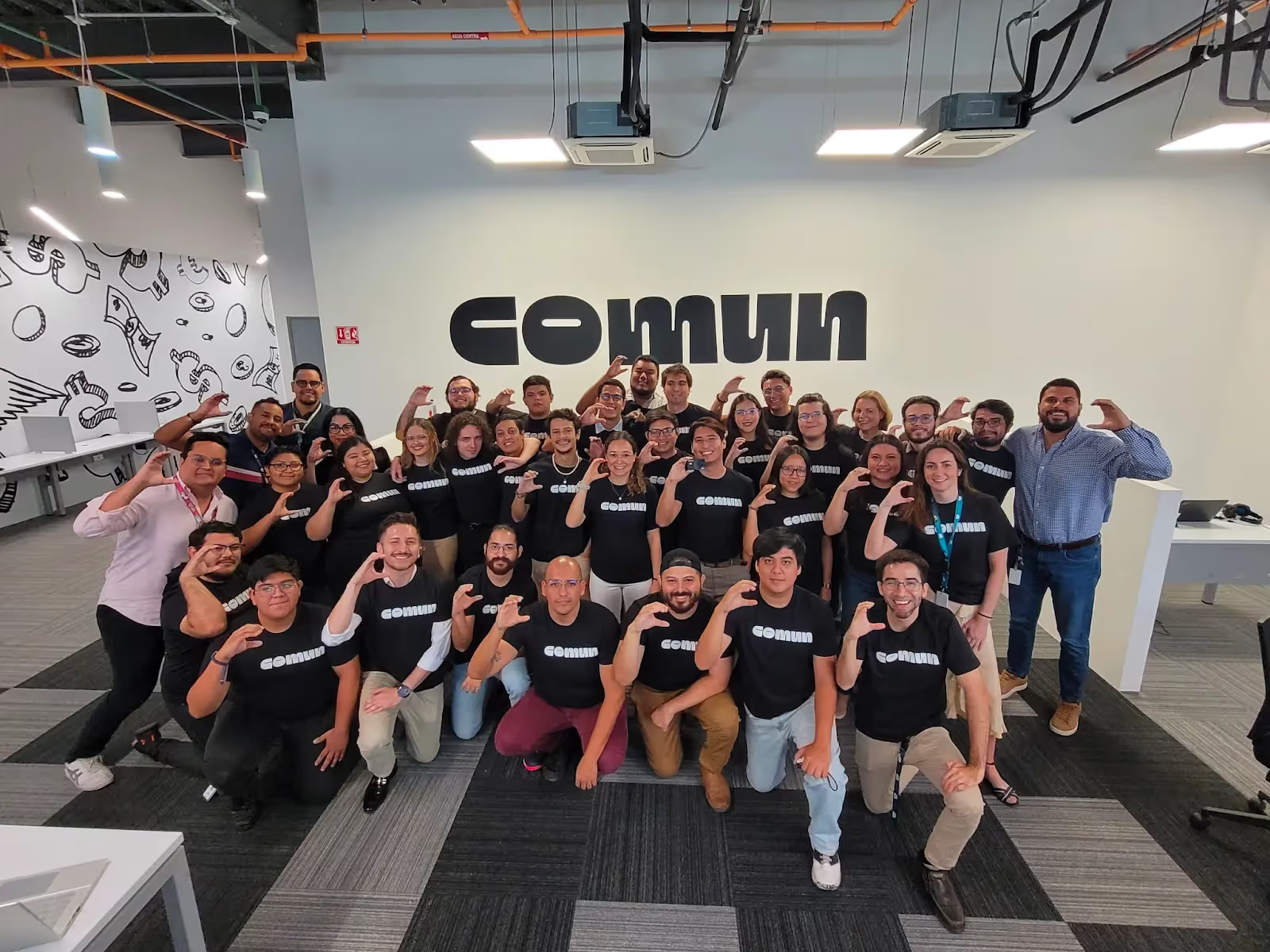
Comun aprovecha el poder de la Comunidad para redefinir la banca de relación digital para los inmigrantes en los EE. UU.
8 min de lectura
Comun no tiene sucursales, pero cuenta con un equipo que apoya a sus clientes las 24 horas del día, los 7 días de la semana, sin salir de sus hogares, en tres idiomas diferentes.
Construir mejor futuro para los inmigrantes en los EE. UU. es un principio fundamental de la misión de Comun. Opciones bancarias accesibles y fáciles de entender son una parte clave del viaje del inmigrante. Sin embargo, las opciones son escasas.
Las opciones complejas, engorrosas y costosas son la norma. Actividades que pueden parecer triviales e intuitivas para los nacidos en los EE. UU. son abrumadoras y confusas para un inmigrante recién llegado. Todo, desde configurar un depósito directo con un empleador hasta enviar dinero a casa, realizar pagos de bienes y servicios o comprender cómo construir un puntaje crediticio, parece demasiado complejo para cualquiera que nunca haya tenido que hacer esto en los EE. UU., y mucho menos en absoluto.
Las tarifas ocultas y las comisiones costosas añaden un nivel de estrés al comenzar una vida financiera en los EE. UU. Entre los saldos mínimos de cuenta, las tarifas mensuales, los cargos por sobregiro, las grandes tarifas de depósito de cheques, las comisiones extorsivas de transferencias internacionales y todo lo demás, mantener y usar una cuenta bancaria en los EE. UU. puede ser costoso. Para los trabajadores manuales, esto puede representar un porcentaje importante de su salario.
Las ubicaciones físicas de los bancos tradicionales también pueden ser escasas en algunas áreas. Dado que abrir una cuenta bancaria o depositar un cheque o efectivo en la cuenta debe hacerse en la sucursal, esto es una carga significativa para alguien que vive en una zona remota. Muchos inmigrantes, a veces trabajando en granjas o fábricas remotas, viven en áreas a kilómetros de distancia de la sucursal bancaria más cercana. Los costos de transporte a esas sucursales se suman a las tarifas ya altas de usar y mantener una cuenta.
Incluso si los servicios bancarios proporcionados fueran más intuitivos, digitales y a un costo menor, queda otra barrera importante. Obtener la documentación necesaria para abrir una cuenta bancaria también puede dificultar el acceso a servicios financieros justos y simples. Los inmigrantes lo suficientemente afortunados como para tener autorización de trabajo aún necesitan reunir documentación importante que no siempre está disponible para ellos. Para aquellos que han llegado a los EE. UU. buscando asilo o mejores oportunidades de trabajo siguiendo un camino más no convencional, los documentos requeridos para abrir una cuenta a menudo son prohibitivos.
Construir una plataforma bancaria 100% digital para resolver los problemas mencionados es parte de lo que Comun busca lograr porque creemos en ayudar a desbloquear la movilidad social. Pero una plataforma digital, de bajo costo e intuitiva no es suficiente. Para navegar este proceso, los inmigrantes necesitan ayuda, y la ayuda se encuentra mejor en una Comunidad que los entiende cuando más lo necesitan.
Es por eso que no solo nuestros clientes son parte de nuestra Comunidad, sino también las personas que los ayudan las 24 horas del día, los 7 días de la semana a través de nuestra aplicación, redes sociales, WhatsApp o por teléfono. Más allá de resolver un problema inmediato, el apoyo brindado va más allá. Enseña y educa, empatiza y se esfuerza por fomentar un sentido de Comunidad de personas que los entienden, en términos que comprenden y en el idioma que hablan. Este es el núcleo de la verdadera banca comunitaria digital. Nuestro equipo les ayuda a configurar su depósito directo, conectarse a Zelle, obtener reembolsos por cargos con los que no están de acuerdo y todo lo demás.
En Comun, el primer paso en este viaje ha comenzado. Nuestro equipo en Mérida, México, es parte de nuestra Comunidad y a la que buscamos servir. Son una extensión de nuestra misión y de nuestra plataforma digital, y un ingrediente necesario para desbloquear la movilidad social para millones de inmigrantes en los EE. UU.

Financial Education
Which one is the best traditional bank in the United States? A Practical Guide for Immigrants
8 min de lectura
Having a bank account is an essential step for people arriving to work in the United States, since it makes it easier for them to manage their salaries and adapt to the country’s financial system.
This can be a complicated process, since in the United States there is a wide variety of financial institutions, such as traditional banks with hundreds of branches, digital banks, and credit unions.
Among the most well-known are Bank of America, Capital One, and Wells Fargo, which enjoy significant recognition in the country. However, it is not possible to name one as the best: this depends on the specific needs of users.
For example, immigrants in the United States look to prioritize ease of account opening, as well as the ability to send remittances to their loved ones.
In this article, we will explain which are the best banks in the U.S., their features, requirements, and everything you need to know before opening an account.
The 6 Best Banks in the United States in 2025
Below, we present a comparative table of the best banks in the U.S.
| Bank | Strengths | For Whom It Is Ideal |
|---|---|---|
| JP Morgan | Largest network of branches and ATMs, rewards available on credit card | People who want easy access to physical branches, along with a variety of financial products |
| Bank of America | Over 3,000 branches, bilingual service in Spanish and English | For those who prefer to communicate in Spanish and seek a bank with a solid reputation |
| Wells Fargo | Wide branch coverage, express international transfers | People looking for reliable options to send remittances |
| Citibank | International presence, global focus | Those who need to make frequent international money transfers |
| Capital One | No monthly fees and no minimum balance | Those seeking more accessible and digital options |
| PNC | Over 2,300 branches, mobile app for financial management | Those seeking to improve their personal financial management |
How to Choose the Best Bank to Open an Account
If you are about to start your financial life in the United States, choosing a bank where you open an account is a very important decision. Each has its own requirements and benefits, so you should look for the one that best fits your expectations.
These are the most relevant criteria you should analyze before choosing the best option for you.
Accepted Identification
Many banks request the SSN (Social Security Number) to process a bank account, while others accept alternatives such as the ITIN or a passport.
Support and Availability
Although some banks do offer support in other language, like Spanish, not all of them do. Verify that the institution you choose can clearly answer your questions.
Cash Deposits and Withdrawals
If you frequently receive cash payments, it is important that your bank allows you to make cash deposits at branches near you and without fees.
Transfers and Remittances
Sending remittances is a crucial issue for immigrants, so you should review the fees for international money transfers. These are often more expensive in traditional banks due to intermediaries and exchange rates.
Digital Security
Verify that the bank has security measures in digital banking, as well as backing from official institutions such as the FDIC.
5 Digital Finance Platforms in the United States
Beyond traditional banks, you can also turn to digital alternatives, which tend to be more accessible.
Digital banks or financial platforms are institutions that operate online through mobile apps and websites. They do not depend on physical branches and tend to make processes easier in favor of financial inclusion.
There are financial platforms focused on meeting the needs of immigrants in the United States, as they address gaps and obstacles of traditional banks with flexible account-opening requirements, accessible fees for remittance sending, and ease of depositing cash.
Común
Advantages: focused on the needs of immigrants, support available in Spanish, and has accessible account-opening requirements.
Disadvantages: it does not have physical branches or an ATM network, but you will always be able to access your digital money from the palm of your hand, without time restrictions; you can also withdraw and make cash deposits at thousands of locations in the United States.
Ally
Advantages: 100% digital bank with High Interest Rates (APY) on savings accounts.
Disadvantages: it is not possible to make direct deposits.
Axos
Advantages: offers various types of accounts and attainable options for students and immigrants.
Disadvantages: limited support in Spanish.
Chime
Advantages: offers accounts with no monthly fees, ATM network, and payroll advance.
Disadvantages: difficulty in making cash deposits.
Discover
Advantages: offers credit cards with rewards, checking and savings accounts without monthly fees.
Disadvantages: few cash deposit options, and it is not focused on the needs of immigrant communities.
Común: A financial platform for immigrants in the U.S.
As you can see, there is a variety of financial institutions you can turn to, and access to a full range of services such as cash deposits, transfers, financial management, etc.
That is why you must be clear about what you are looking for in a U.S. bank account and how you could meet your needs.
Most traditional banks tend to have stricter requirements and higher operating costs. For this reason, many immigrants consider digital financial platforms as an alternative, since they are often more accessible and designed with services that address their needs.
Común is a fintech platform that can support you in starting your financial journey in the United States, offering benefits such as:
- Open your account with the qualified official identification from your country of origin
- Forget about hidden fees and minimum balances
- Send money to your loved ones in Latin America for a fee starting at $2.99 USD (up to the applicable limits)
- Access a network of more than 88,000 locations for cash deposits and withdrawals
- Access Spanish-language support available 24 hours a day
- Get a Visa debit card
- Manage your finances from a comprehensive and easy-to-use mobile app
Open your account today and start sending money through Común’s mobile app.
Frequently Asked Questions
If you have more questions, check our FAQ section.
Which is the safest bank in the U.S.?
FDIC insurance is relevant to determine if a bank is safe. Traditional banks have this backing, as do digital banks like Revolut (through Sutton Bank) and fintech platforms such as Común.
Which bank charges fewer monthly fees for a bank account?
Many digital banks and fintech platforms, including Común, often offer competitive rates. This can be due to lower operating costs, since they do not maintain physical branches. However, fees and account features vary by provider.
.avif)
Financial Education
Your essential guide to the bank routing number in the U.S.
8 min de lectura
The bank routing number, or ABA Routing Number, is essential information for making money transfers. It is a 9-digit code used to identify each financial institution in the United States.
This code is so important because it ensures that electronic transactions are carried out correctly and that funds reach the designated bank.
In this article, we offer a complete guide to help you understand what a bank routing number is, what it does, where to find it, and how it is used in everyday electronic financial transactions.
What is a bank routing number (ABA), and why is it essential in the U.S. banking system?
An ABA routing number, or transit routing number, is a unique 9-digit code that serves as an identifier for each financial institution in the United States.
It differs from a bank account number in that an account number is personal, valid for the use of a single user only. By contrast, the routing number is a unique identifier for banks, credit unions, and digital banks.
The primary function of the routing number is to allow financial institutions to precisely identify which bank to send to or receive from during routine operations such as direct deposit of payroll, automatic payments (ACH), and electronic transfers.
It is important to note that this code is different from a bank account number and is not equivalent to the IBAN (International Bank Account Number), which is a set of numbers used especially in Europe to identify international bank accounts and is composed of the country code, check digits (the checksum of the bank account number), and a bank account number.
In the United States, however, the SWIFT/BIC code is used for international money transfers, not the IBAN.
Here are some crucial functions of the bank routing number in digital transactions.
Unique bank identification
The bank routing number helps prevent errors when identifying a specific bank and processing a transfer from one institution to another, even when they have similar names or many branches across the country.
Facilitates electronic transfers
This code is also indispensable so that ACH systems and wire transfers can send funds to the correct destination, quickly and securely.
Key for direct deposits
The ABA number is also essential for employers to make direct deposits, using that code together with the checking account number, without the need for checks or cash.
Automated bill payments
To set up automated payments for services such as electricity, water, and online subscriptions, you must provide the bank routing number so the billing system can process the transaction automatically.
Handling funds between banks
This number is also indispensable for transactions involving multiple financial institutions, such as interbank transfers or check clearing.
How to find a bank routing code and your bank account number
By now, the importance of the ABA number is clear. But how do you find a bank routing code? Knowing this information is the first step to making transfers correctly.
Likewise, it is essential to understand how to find your bank account number and to tell one number from the other to avoid confusion.
The routing number consists of 9 digits and identifies the bank. The account number has usually 10 to 12 digits and identifies the individual account within the bank.
To find your account number, look at the bottom of a check; it is the series of numbers that follows the routing number. You can also find it at the top of a statement or directly in the mobile application.
It is essential to make sure you have the correct routing number before making a transfer. Therefore, it is advisable to confirm it directly with your financial institution to avoid errors.
Many users ask where to find the routing number on a physical debit card. However, the routing number is not printed on such instrument because it is intended for digital transfers, not for payments at physical merchants.
These are the most common places to find the routing number for your bank or financial institution.
On your checks
Check the lower left corner of your personal or business checks; the routing number is the 9 digits shown there.Another relevant detail is the check number, which is usually at the top.
Mobile application
Another way to find this code is to access your mobile application and go to the transfers or direct deposit information section.
Bank statements
Check your latest bank statement, whether physical or digital; the routing number may appear in a section of that document.
Direct contact with your bank
If you have any doubt about the routing number, you can contact your bank by phone or visit a branch so they can clarify any questions before you make a bank transfer.
Your routing number and account: Key tools for your finances in the U.S. with Comun
Throughout this article, we have learned the importance of both the bank routing number and the bank account number in the U.S. financial system. Both are indispensable for carrying out fast and secure digital transactions.
Being clear about what a bank’s ABA number is not only lets you carry out digital transactions with ease but also gives you financial autonomy to allocate your resources toward the services you need for your well-being.
The U.S. financial system can seem complicated, especially for immigrant communities. That is why Comun seeks to streamline processes and offer transactions without complications.
- Receive and send money easily from your mobile application
- Integrate other applications and enhance your experience
- Access support available in Spanish and English
- Send international remittances with fees starting at $2.99 USD, up to the applicable limits.
- Get started with official ID from your country
Open your account today and discover an ally to manage your finances in the United States.
Frequently Asked Questions
If you have more questions, check our frequently asked questions section.
Where can I find my routing number if I don’t have checks?
You can find it on your account statement or by calling the bank directly.
What is the routing number for ACH transfers?
It is the code that identifies each bank and consists of 9 digits.
Is the routing number the same for all banks?
No. Each bank has a different routing number.
What is the routing number on a card?
The routing number does not appear on physical cards.
What is the routing number on a check?
It is found at the bottom of a check and consists of 9 digits.

Living in the United States
Get a job in the USA: 10 websites to apply today
8 min de lectura
For the immigrant community, the job search is an essential step in the process of adapting to a new life in the United States; in most cases, it involves a significant investment of time and resources across different platforms.
According to recent data, around 30.9 million foreign-born people work in the USA, representing 19% of the country’s active workforce.
The job market in the United States continues to be a notable option due to the opportunities to improve one’s standard of living.
For this reason, here we explain how to look for a job in the United States on different websites according to your professional profile, and we give you some tips to make your resume stand out from the rest.
Websites to look for jobs in the United States
Today, the internet makes it easier to look for job opportunities thanks to the variety of websites and applications devoted to posting and managing job boards for a large number of companies looking for all kinds of profiles.
Main websites to look for jobs
Below is a list of the most effective online job search sites for immigrants, with their features.
Indeed
Indeed is one of the most popular websites for looking for jobs in the United States. It lets you upload your résumé and personal information to apply to job postings of interest with one click.
LinkedIn is another widely used job-search platform, due to the number of registered users and the ability to search for specialized jobs with professional requirements and language skills.
It also functions as a social network to share content with other contacts and to build networking with employers and applicants.
Glassdoor
Glassdoor is a website with thousands of available job postings across a wide range of profiles. Its advantage is that it allows current and former employees to review companies anonymously and share their experiences with future job applicants.
Monster
Monster is one of the oldest websites for looking for jobs in the United States. It offers different tools: résumé creation and job interview practice, among others.
It includes numerous job postings from different sectors, and even opportunities that do not require work experience.
ZipRecruiter
ZipRecruiter is another competitive alternative for job searching, since it leverages artificial intelligence to connect employers with candidates according to their profiles and specific requirements.
Job boards for more specific profiles
On the other hand, there are various portals that post job opportunities for more specific profiles, which generally require professional studies and several years of experience.
USAJobs
USAJobs is the official job-search website of the U.S. Government. It is an excellent alternative for those who have legal residency or citizenship in that country and are looking for a stable job with federal benefits.
FlexJobs
FlexJobs is a website that facilitates the search for remote work, ideal for freelancers and for those seeking a more flexible modality than the traditional employment scheme.
TheMuse
TheMuse focuses on posting creative profiles and fostering workplace culture. Candidates can access employee reviews and interviews with company executives. In addition, it is a portal that promotes inclusion, a positive aspect for immigrants.
Upwork
Upwork is a website oriented toward remote work, especially in writing, digital marketing, programming, and design. The advantage is that it is ideal for people outside the U.S., since it does not require a work visa if you operate from your home country.
Fiverr
Fiverr is one of the most well-known global platforms for remote work. It stands out because, in addition to searching among posted job offers, you can also offer your services and set rates.
As you can see, whether in-person or remote work, there is a wide variety of options to work in the United States. Don’t miss our article “How to make money in the USA?” and discover how to generate additional income in the U.S.
Tips for finding a job quickly and without complications
Looking for a job is often exhausting due to high competition and a saturated labor market—not to mention the challenges of job hunting in another country.
For each of the platforms mentioned, there are tricks to make your application more relevant and help you stand out among the multitude of applicants seeking the same opening as you.
Below is a list of strategies to make your job search in the United States easier.
Create a complete résumé with keywords relevant to the role
It is important to tailor your résumé to the type of job you are seeking and optimize it according to the skills requested by companies.
To ensure you have an optimized résumé that passes HR recruiting filters, you can rely on tools like resume.io, which even recommends how to generate a cover letter with AI.
Activate job alerts so you can be the first to apply
Be sure to activate job alerts based on your preferences so job postings arrive in your email. Some platforms also offer a premium subscription to give your profile greater visibility.
Research companies before applying
It is essential to research the companies you apply to, not only to ensure they are legitimate postings, but also to understand how your profile fits and what you can contribute with your work experience.
Avoid scams and postings that request payments
Avoid making payments to employers during the hiring process, even if requested. If you suspect a fraudulent offer, report it directly to the website.
Keep a record of the openings you have applied to
It is advisable to create a personal database to keep track of the openings you have applied to, especially if you are using multiple websites. There you can create different tabs to manage your processes, such as: résumé sent, interview scheduled, pending, negotiation in progress, among others.
Común: your financial ally to receive your salary while living in the U.S.
Although looking for a job in another country can seem complicated, there are tools and strategies that make the process easier so you can stand out among applicants.
When you get the desired position and start earning money in the United States, you will need an ally to help you manage your salary efficiently through a bank account.
Meet Común, the digital platform that accepts official IDs from your country of origin to open your account and that allows you to manage your finances.
Frequently Asked Questions
Good luck with your search! Do you have more questions? Check our frequently asked questions section.
Do I need a work permit?
Yes. To work legally in the U.S. you need work authorization, although there are remote options that allow you to operate from your country of origin.
What should I know before looking for a job in the United States?
It is important to review the basic documents required to work in the United States and the labor rights in this country.
What are recruiting agencies?
Recruiting agencies for working in the United States are intermediaries that connect companies with qualified candidates according to the requested profiles.
Is it possible to work in the United States without knowing English?
Yes, it is possible, such as in the construction, agriculture, or cleaning industries.
.avif)
Immigration
What is SSN? Everything you need to know if you are a resident in the U.S.
8 min de lectura
The Social Security Number is one of the most important identifiers in the U.S. It is required for seeking to access benefits such as access to employment, tax filing, and financial services, among others.
If you have newly arrived in the U.S., you likely have questions about how to handle certain procedures. Therefore, we will explain what the SSN is, what it is for, how to apply for it, how much it costs, and what the benefits are of having this identifier.
What is the Social Security Number (SSN)?
The Social Security Number (SSN) is a series of 9 digits issued by the Social Security Administration (SSA, or Administración del Seguro Social in Spanish). It is issued to citizens, permanent residents, and eligible temporary residents, in accordance with their immigration status.
Its main function is to serve as a unique identification number that allows the government to track specific data for each person, such as their income, financial information, and employment history. This makes it possible to determine, in each particular case, eligibility to access Social Security benefits such as retirement, disability, among others.
In addition to facilitating access to these benefits, the Social Security card serves as official identification for employment onboarding, driver’s licenses (in some states), and opening bank accounts.
How to obtain the Social Security Number in the United States?
An important point about the Social Security Number in the U.S. is that there are three different types:
- For citizens born in the United States
- For citizens born abroad
- For non-citizens with lawful resident status
In the case of lawful permanent residents, it is necessary to obtain a Green Card or a visa with valid work authorization issued by the Department of Homeland Security (DHS), such as H-1B or L-1.
The process of obtaining the SSN varies depending on immigration characteristics. If you requested the SSN during your visa processing—through the “Application for Immigrant Visa and Alien Registration” form or the DS-260 electronic format, “Immigrant Visa Electronic Application”—DHS will contact the Social Security Administration directly to carry out the process.
Get your SSN in just 4 steps
If you did not request the SSN during your visa process, the first thing you should do is gather the following documentation:
- A valid passport with the Machine Readable Immigrant Visa (MRIV) or a Permanent Resident Card (Form I-551)
- Birth certificate
Once you have gathered the documentation, follow these steps:
- Download and complete the SS-5 application
- Go to an SSA office
- Present the original documents
- Wait 7 to 14 days to receive the Social Security card by mail
What to do if your SSN card is lost?
If your Social Security card is lost, it is important to take security measures immediately to avoid identity theft, fraud, or misuse of your personal data.
Report the theft or loss of this document to the police and then file a complaint with the Federal Trade Commission (FTC).
Afterwards, go to the Social Security Administration, complete the SS-5 form again, and bring the corresponding documents for replacement of the card.
Avoid carrying the card with you unless necessary and keep it in a safe place. Generally, you do not need to present your physical card but rather the number, which does not change even if you replace the card.
5 benefits of having an SSN
If you are still wondering what the SSN is for, you should know that this document provides multiple benefits of different kinds, such as the following:
1. Employment
For permanent residents, the greatest benefit of the SSN is that it grants work authorization, enables income tracking, as well as the payment of taxes and legal obligations. Presenting this document is an indispensable requirement during formal hiring processes in the United States.
2. Credit
The SSN is also typically required to apply for loans and credit from banks and financial institutions in the United States; in this way you can access assets such as real estate, a car, or other types of services.
3. Banking services
Accessing financial services is essential for immigrant workers in the United States, whether to receive wages or send money to their countries of origin. Generally, the SSN is a requirement to access a bank account and credit and debit cards, among other services.
4. Government benefits
There are other benefits available, such as unemployment insurance in the event of dismissal, and access to retirement and Medicare starting at age 65, for eligible permanent residents.
5. Taxes
The SSN functions as the taxpayer’s personal identification number, which makes it easier to file tax returns and report income and expenses. Another alternative for residents who do not have an SSN is the ITIN, issued by the Internal Revenue Service (IRS), which serves to fulfill tax obligations and grants other benefits.
In short, the Social Security Number—beyond being an administrative procedure—facilitates economic and social integration in the United States because it serves to track income and expenses and facilitates access to basic rights such as work, health, and banking, which are essential for integrating into society.
How much does it cost to get an SSN?
It is important to clarify that the Social Security card process does not involve any cost, whether you do it for the first time or as a replacement due to theft or loss.
Stay alert to potential fraud and avoid making payments to unauthorized third parties. If you have any doubts, go directly to your local Social Security office and report any suspicious activity.
Read more: Don’t miss our guide to investment basics for immigrants
Simplify your financial life upon arriving in the United States with Comun
As you can see, the SSN is highly relevant to establishing a stable life in the United States because it facilitates access to work, health services, and financial products that are essential for carrying out daily tasks such as payments and money transfers.
Comun is a financial platform designed to make life easier for immigrants in the United States by facilitating their integration into the financial system from day one.
- Open your account with an official ID from your country of origin
- Receive a Visa debit card and make purchases easily in physical stores and online
- Access a mobile application and manage your finances from the palm of your hand
- Send remittances to your home country for a fee starting at $2.99 USD, up to the applicable limits
- Forget about hidden fees and complicated processes
- Access support available in Spanish and English
With Comun, discover the most accessible way to manage your finances for everyday life in the United States.
Frequently Asked Questions
If you still have questions, consult our Frequently Asked Questions section.
What should I do if someone uses my SSN without permission?
Report immediately at IdentityTheft.gov and place a fraud alert.
How many times can I replace my SSN card?
Up to 3 times per year and a maximum of 10 times in your lifetime.
Is it mandatory to have an SSN to open an account with Comun?
Comun allows you to open an account with official ID from your country.

International Money Transfers
What banks does Zelle have in Mexico? A Complete Guide to Sending and Receiving Money from the U.S.
8 min de lectura
Have you heard of Zelle? It is a highly popular digital payments platform in the United States. It allows users with accounts at affiliated banks—whether traditional banks, digital banks, or credit unions to easily send and receive money.
In 2024 alone, Zelle reported 151 million enrolled accounts, including individuals and small businesses, reflecting its widespread adoption among U.S. users.
If you need to send money outside the United States easily, for example Mexico, you may be wondering which banks in Mexico support Zelle.
However, this platform does not have agreements with any banks in Mexico, and it is mandatory to have a U.S. banking account to access its services.
Nevertheless, there are other options as efficient as Zelle for sending money to Mexico, such as banking accounts with integrated remittance services and international money transfer applications.
Below, we explain how to receive money through Zelle, the benefits it offers for users in the United States, and the alternatives available for sending money to other countries.
What is Zelle and Is It Possible to Use It in Mexico?
Zelle is a digital payments service that facilitates P2P (peer-to-peer) transfers at certain partner banks within the United States.
It is known for being a fast service, with money transfers reflected within minutes, in addition to being free and having broad coverage throughout the U.S.
It operates through the mobile apps of participating banks, as it is directly integrated with them and only allows money transfers to other Zelle users.
But which bank in Mexico is compatible with Zelle? Unfortunately, it is not possible to send or receive money through this platform in Mexico, as it is not designed for international money transfers and only complies with the technological and regulatory standards of the U.S. financial system.
Which Banks in Mexico Use Zelle? Everything You Need to Know
No bank in Mexico is compatible with Zelle services, meaning that international money transfers cannot be made through this platform.
To use Zelle, you must have a U.S. banking account at one of the affiliated banks.
Here is a list of some of the major banks that support Zelle in the United States:
- Ally Bank
- Bank of America
- BMO Harris Bank
- Capital One
- Chase (JPMorgan Chase)
- Citibank
- Citizens Bank
- Discover Bank
- Fifth Third Bank
- FirstBank
- Frost Bank
- Huntington Bank
- PNC Bank
- Regions Bank
- TD Bank
- Truist Bank
- US Bank
- Wells Fargo
Although Comun is not integrated with Zelle, this does not limit its functionality, as it is a comprehensive personal finance solution that goes beyond just money transfers.
How to Send Money to Mexico with Zelle? Answers and Efficient Alternatives
If you need to send money to Mexico quickly, you will have to choose a different service than Zelle, as it only allows bank transfers between U.S. accounts.
The main reasons Zelle is not available in Mexico are:
- To register with Zelle, you must access the online banking platform of one of the affiliated U.S. banks.
- You also need a U.S. phone number or email address.
- Zelle is not a remittance or international payment platform, so it does not have the capacity to convert currencies or deposit funds in international banks.
- Zelle does not comply with the regulations of financial institutions in Mexico, such as Banxico and the CNBV.
If you have used Zelle to send money within the United States, you are likely looking for a similarly reliable system to make international money transfers.
U.S. Banking Accounts with Integrated Remittance Services
In addition to traditional banks, there are alternatives that offer integrated remittance services to facilitate money transfers to Mexico.
Comun is a platform that meets the needs of many people in the United States, especially the immigrant community, by allowing remittances to be sent to loved ones easily, at very low cost, and through a single mobile application.
International Money Transfer Platforms
Another alternative for making international money transfers is to use platforms specialized in this type of transaction.
Examples include:
- Wise: sends money between accounts using the real time exchange rate.
- Remitly: offers international money transfers with standard or instant delivery.
The advantage of these platforms is that a bank account is not required, and their operation is accessible. However, the money transfer fees vary depending on factors such as the amount to be sent and the exchange rate.
Traditional International Bank Transfers to Mexico
You can also opt to make money transfers through traditional banks, for which you will need the SWIFT code of the receiving institution in Mexico and the recipient’s banking details.
Although it is a secure option, it is also one of the most expensive, due to high fees and intermediaries that increase the cost.
For example, a U.S. bank like Bank of America charges a $45 USD fee plus an average of 1% to 3% exchange rate margin. Therefore, in a money transfer of $1000 USD, the recipient receives approximately 900 pesos MXN less than with specialized international money transfer platforms.
Cash Deposit/Withdrawal Services at Retail Networks
If the recipient does not have access to a banking account, you can choose a service for cash deposit and withdrawal at physical locations.
Some examples include:
- Western Union: global network for bank transfers and cash delivery
- MoneyGram: allows money transfers to banking accounts and in cash
- Comun: also allows quick cash transfers
Beyond Zelle: Comun Simplifies Your Financial Life in the U.S. and Your Money Transfers to Mexico
Although Zelle is a very effective service for sending and receiving money within the United States, it has limitations that prevent international money transfers, making it more suitable for citizens who need to make frequent payments within U.S. territory.
For the immigrant community in the United States, it is important to choose a solution that not only facilitates money transfers but also offers a complete, accessible, and easy-to-use finance platform.
Comun is the platform that will simplify your financial life in the United States, offering the following benefits:
- Open an account easily using your official ID from your country.
- Forget about traditional fees: no opening fee, no monthly maintenance fee, and no minimum balance required.
- No hidden charges for remittances: your first international money transfer is free, and afterward you pay a fee starting at $2.99 USD per transfer, up to the applicable limits.
- Customer support also available in Spanish.
- Integrate your finances and remittance service in a single mobile application, making Comun the most suitable option.
- Obtain a Visa debit card to make purchases in physical stores.
- Access an extensive cash management network and make deposits at thousands of locations near you.
Open your Comun account and access a financial service without complications.
Frequently Asked Questions
Do I need a U.S. account to use Zelle?
Yes, Zelle is only available through the online banking platforms of affiliated U.S. banks.
Can I send money to Mexico via Zelle if I have a U.S. account?
No, no bank in Mexico is compatible with Zelle.
What are the best alternatives to Zelle for sending money to Mexico?
Comun: a fintech platform that provides access to an account and remittance capabilities.
Does Comun offer Zelle for sending money to Mexico?
Comun is not connected to Zelle, but you can send money to Mexico for a fee starting at $2.99 USD per transfer up to the applicable limits.
How do I set Zelle to Spanish?
Since it is a service available through the affiliated bank apps, you must access their settings and select Spanish as the preferred language.
How do I download Zelle?
Go to the Play Store or App Store and search for Zelle. Remember, it is only available in the United States.
Living in the United States
Todo lo Que Necesitas Saber Sobre Cuentas Bancarias en EEUU: Apertura, Uso y Gestión
8 min de lectura
Cuentas Bancarias
Tener una cuenta bancaria es esencial para gestionar tu vida financiera de manera eficiente y ofrece numerosos beneficios prácticos. Una de las principales ventajas es el almacenamiento seguro del dinero. A diferencia de mantener efectivo en casa, que puede ser vulnerable a robos, pérdidas y daños, el dinero guardado en una cuenta bancaria es seguro y protegido. Además, las cuentas bancarias proporcionan una gran conveniencia para las transacciones diarias. Puedes pagar facturas fácilmente, recibir depósitos directos, retirar efectivo y hacer compras con una tarjeta de débito vinculada a tu cuenta. La banca moderna también te permite gestionar tus finanzas desde prácticamente cualquier lugar a través de plataformas de banca en línea y móvil.
Tipos de Cuentas Bancarias: Corriente y de Ahorros
En el ámbito de las finanzas personales, entender los diferentes tipos de cuentas bancarias es crucial.
- Cuentas Corrientes: Las cuentas corrientes, a menudo llamadas cuentas corrientes personales, están diseñadas para transacciones diarias como depositar dinero y compras con tarjeta de débito. Frecuentemente vienen con la opción de depósitos directos y pagos de facturas en línea. Entender las diferencias entre las cuentas corrientes y de ahorros es esencial, especialmente cuando se consideran promociones y bonificaciones bancarias que a menudo presentan ofertas específicas para abrir nuevas cuentas corrientes y de ahorros, incluyendo requisitos de depósitos directos y depósitos mínimos para calificar para bonificaciones en efectivo.
- Cuentas de Ahorros: Las cuentas de ahorros, incluidas las formas especializadas como la cuenta de ahorros de Barclays, están destinadas a almacenar dinero durante un período más largo, a menudo con el objetivo de construir un fondo de emergencia. Estas cuentas pueden ofrecer una tasa de interés más alta y, a veces, requieren un saldo mínimo. La combinación de cuentas corrientes y de ahorros puede proporcionar una solución bancaria integral, ofreciendo tanto la flexibilidad de las transacciones diarias como el beneficio de ganar intereses sobre ahorros a largo plazo, lo cual es particularmente ventajoso cuando los bancos ofrecen promociones y bonificaciones para estas cuentas.
- Cuentas del Mercado Monetario y CD (Certificado de Depósito): Generalmente ofrecen rendimientos porcentuales anuales más altos que las cuentas de ahorros regulares, bloqueando los fondos durante un período especificado para lograr mejores retornos.
Entender estas opciones ayuda a alinear los servicios bancarios con tus objetivos financieros, ya sea que estés considerando abrir una cuenta corriente empresarial o una cuenta de ahorros conjunta en el mismo banco o cooperativa de crédito.
Abrir tu Primera Nueva Cuenta Bancaria
Para abrir una cuenta, particularmente una nueva cuenta bancaria en línea, comienza eligiendo la institución financiera adecuada: puede ser un banco solo en línea, un banco tradicional o una cooperativa de crédito, dependiendo de tus necesidades y preferencias financieras. Considera factores como la accesibilidad, el servicio al cliente, las estructuras de tarifas y la disponibilidad de funciones de banca en línea y móvil al seleccionar dónde abrir tu cuenta.
El proceso generalmente implica hacer un depósito inicial, que puede variar pero a menudo es un depósito mínimo de apertura. Cumplir con el depósito mínimo es crucial para calificar para las bonificaciones de la cuenta. Algunas instituciones pueden requerir solo unos pocos dólares, mientras que otras pueden pedir una cantidad mayor, especialmente para cuentas premium o especializadas. Durante la fase de apertura de la cuenta, necesitarás proporcionar información personal como un número de Seguro Social o un Número de Identificación del Contribuyente Individual, y una identificación emitida por el gobierno, como un pasaporte o licencia de conducir. Esta información ayuda al banco a garantizar el cumplimiento de los requisitos regulatorios, incluyendo los relacionados con el lavado de dinero.
Muchos bancos ofrecen bonificaciones de cuenta bancaria o una bonificación de cuenta corriente a nuevos clientes de cuentas corrientes, lo cual puede ser un incentivo atractivo. Abrir una cuenta corriente personal en América viene con bonificaciones y recompensas específicas, incluyendo bonificaciones en efectivo por cumplir ciertos requisitos como un depósito directo calificado. Para calificar para estas bonificaciones, los clientes a menudo necesitan cumplir con criterios como un depósito mínimo dentro de un cierto plazo y mantener ese saldo por un período específico. Por ejemplo, algunas instituciones financieras ofrecen bonificaciones en efectivo por configurar un depósito directo calificado. Este incentivo a menudo requiere que recibas un pago regular, como un salario o un beneficio gubernamental, directamente en tu nueva cuenta dentro de un cierto período de tiempo desde la apertura de la cuenta. Asegúrate de entender los términos y condiciones asociados con estas bonificaciones, como los requisitos de saldo mínimo y la duración de los depósitos directos.
Además, pregunta sobre cualquier tarifa potencial asociada con la cuenta, como tarifas de mantenimiento mensual, tarifas de uso de cajeros automáticos y cargos por sobregiro. A veces, los bancos ofrecen exenciones de tarifas en ciertas condiciones, como mantener un saldo mínimo o incluso por inscribirse en depósitos directos. También es beneficioso preguntar sobre las políticas de sobregiro del banco. Algunos bancos ofrecen programas de protección contra sobregiros, que pueden evitar que incurras en tarifas si accidentalmente sobregiras tu cuenta. Este servicio puede ser un salvavidas para los nuevos titulares de cuentas no familiarizados con la gestión de su saldo, pero típicamente viene con un costo adicional.
Por último, considera las opciones de servicio al cliente y soporte del banco. Un soporte al cliente confiable puede ser invaluable, especialmente si encuentras problemas con tu cuenta o necesitas orientación sobre el uso de los servicios bancarios. Al considerar cuidadosamente estos aspectos, puedes asegurar que tu primera experiencia bancaria sea positiva y financieramente beneficiosa. Recuerda, el banco adecuado para otra persona podría no ser el banco adecuado para ti, así que elige basado en tus circunstancias y necesidades financieras específicas.
Común es una Excelente Opción para tus Necesidades Bancarias en USA
Si buscas una solución bancaria confiable y moderna en los Estados Unidos, Común es la opción perfecta para ti. Común es un banco digital diseñado para todos, especialmente para la comunidad de inmigrantes, ofreciendo una experiencia bancaria sin complicaciones, sin cargos ocultos y con herramientas en español que facilitan la gestión de tus finanzas. Con Común, puedes abrir una cuenta en minutos desde tu teléfono, recibir tu tarjeta de débito gratuita y comenzar a disfrutar de beneficios como transferencias sin costo, depósitos directos y acceso a más de 55,000 cajeros automáticos gratuitos en todo el país. Además, Común se preocupa por tu seguridad, implementando medidas avanzadas para proteger tu dinero y tus datos. No esperes más y únete a la comunidad de Común para una experiencia bancaria que entiende y apoya tus necesidades únicas.
Abre tu cuenta corriente¹ en 3 minutos con la ID de tu país²
Mas información sobre cuentas bancarias en Estados Unidos
Te explicamos tu numero de cuenta
Las mejores practicas para gestionar tu cuenta
Gestión Efectiva de la Cuenta
La gestión efectiva de las cuentas bancarias va más allá del simple monitoreo de saldos; abarca un enfoque integral de la administración financiera. Esto implica entender y reducir las tarifas de la cuenta, que pueden incluir el mantenimiento mensual, el uso de cajeros automáticos y los cargos por sobregiro. Una forma de minimizar estas tarifas es cumpliendo con los requisitos de saldo mínimo o inscribiéndose en depósitos directos, ya que muchos bancos ofrecen exenciones de tarifas bajo estas condiciones.
El uso de herramientas de banca en línea y móvil es esencial para una gestión financiera eficiente. Estas plataformas permiten el monitoreo en tiempo real de las transacciones, la transferencia inmediata de fondos y el acceso rápido a estados de cuenta y documentos bancarios, lo cual puede ayudar en la elaboración de presupuestos y la preparación de impuestos. Configurar pagos automáticos de facturas es otra característica crucial, asegurando que todos los pagos se realicen a tiempo, evitando así cargos por pagos atrasados e interrupciones en los servicios.
Para aquellos que gestionan múltiples cuentas, como una cuenta corriente empresarial y una cuenta corriente personal, vincular estas cuentas puede simplificar la gestión del dinero. Permite transferencias más fáciles entre cuentas y una vista consolidada de las finanzas, lo cual es particularmente beneficioso para los propietarios de pequeñas empresas que necesitan mantener separados los gastos personales y empresariales. Además, tener múltiples cuentas bancarias puede ofrecer beneficios significativos, como separar fondos para diferentes propósitos—como gastos diarios, ahorros e inversiones—y atender necesidades financieras individuales o conjuntas, incluyendo para viajes internacionales o propósitos empresariales.
Además, la banca móvil ha revolucionado el acceso a los servicios financieros, permitiendo a los usuarios realizar una variedad de tareas bancarias desde sus dispositivos, como verificar saldos, depositar cheques de forma remota y retirar efectivo en cajeros automáticos sin una tarjeta física. Esta conveniencia, sin embargo, debe equilibrarse con prácticas de seguridad diligentes para proteger los datos financieros.

Seguridad y Protección
La seguridad de una cuenta es crítica para proteger los activos financieros de posibles amenazas como el fraude y el robo de identidad. Los bancos, ya sean en línea o tradicionales, implementan medidas de seguridad robustas, incluyendo cifrado, certificados de capa de conexión segura (SSL) y monitoreo continuo de actividades sospechosas. Sin embargo, la responsabilidad también recae en el titular de la cuenta para mejorar su seguridad personal.
Habilitar la autenticación de dos factores agrega una capa adicional de seguridad, reduciendo significativamente el riesgo de acceso no autorizado. Usar contraseñas fuertes y complejas y cambiarlas regularmente son prácticas fundamentales para asegurar los portales de banca en línea. Los titulares de cuentas también deben estar atentos a las estafas de phishing—intentos fraudulentos de obtener información sensible. Reconocer correos electrónicos, enlaces o llamadas telefónicas sospechosas que soliciten información bancaria personal es crucial.
Monitorear regularmente la actividad de la cuenta es otra medida de seguridad proactiva. Muchos bancos ofrecen alertas personalizables que notifican al titular de la cuenta sobre transacciones inusuales o grandes inmediatamente, permitiendo una acción rápida contra accesos no autorizados. También es aconsejable revisar frecuentemente el historial de transacciones para identificar cualquier irregularidad que pueda indicar actividad fraudulenta. Además, entender las últimas tecnologías de seguridad bancaria y utilizar todas las herramientas disponibles proporcionadas por las instituciones financieras puede mejorar significativamente la seguridad de las operaciones bancarias. Estas herramientas incluyen verificaciones biométricas, como el reconocimiento de huellas dactilares y facial, que ofrecen un nivel de seguridad más alto que las contraseñas tradicionales.
Al incorporar estas prácticas avanzadas de gestión y seguridad, los individuos pueden mejorar significativamente tanto la eficiencia como la seguridad de su experiencia bancaria, asegurando que sus activos financieros se gestionen de manera sabia y se protejan contra posibles amenazas.
Conclusión
Navegar por las complejidades de las cuentas bancarias—desde elegir el tipo correcto hasta gestionarlas y asegurarlas—puede tener un impacto significativo en tu bienestar financiero. Entender los diversos tipos de cuentas disponibles, desde cuentas corrientes personales y empresariales hasta cuentas de ahorros y CD, te permite tomar decisiones informadas que se alinean con tus objetivos financieros. Abrir tu primera cuenta es un paso crucial que sienta las bases para construir un futuro financiero robusto. Al seleccionar la institución financiera adecuada, entender las estructuras de tarifas y aprovechar incentivos como bonificaciones de cuenta, te posicionas para maximizar los beneficios de la banca.
La gestión efectiva de la cuenta y las medidas de seguridad vigilantes son esenciales para aprovechar al máximo tu experiencia bancaria. Utilizar herramientas de banca en línea y móvil no solo proporciona conveniencia, sino que también te permite mantener una supervisión cercana de tus actividades financieras, asegurando que tu dinero trabaje para ti de la manera más eficiente posible. Además, la importancia de la seguridad no puede subestimarse; proteger tu información financiera del fraude y el robo es primordial en la era digital actual.
En última instancia, la gestión cuidadosa y la protección de tus cuentas bancarias son cruciales para mantener la salud financiera y lograr tus objetivos monetarios. Al adoptar las prácticas descritas en esta guía, puedes navegar con confianza en el panorama bancario, tomando decisiones informadas que fortalezcan tus finanzas personales y empresariales. Ya sea que estés abriendo tu primera cuenta o optimizando las existentes, recuerda que cada paso que tomes es un bloque de construcción hacia una mayor seguridad y libertad financiera.






Thousands of immigrants are already achieving more with their money. You can too.
Comun is a financial technology company and not a bank. Banking services are provided by Community Federal Savings Bank; Member FDIC. The Comun Visa® Debit Card is issued by Community Federal Savings Bank, pursuant to a license from Visa U.S.A Inc. and may be used everywhere Visa Cards are accepted.
Comun is a fintech company and not a bank or licensed money transmitter.
* Results may vary. For a complete list of eligible IDs and application requirements, follow this link.
^ No minimums, no maintenance fees. ATM or transfer fees may apply. See app for fee details.
‡ Direct deposit funds are typically available when we receive the payment file, up to two days before the scheduled payment date. This early availability is not guaranteed.
** A service provided by Service UniTeller, Inc. Service UniTeller, Inc. is licensed in all states that require a license. Remittance fees start at $2.99 but may vary. Please check the app for more details. Comun Inc. may earn revenue from the conversion of foreign currencies.
† Funds in your account are FDIC insured up to $250,000 by ownership category through Community Federal Savings Bank (CFSB), Member FDIC, in the event CFSB fails.